Mat Pilates vs Reformer Pilates: What Changes Biomechanically?

EFWA Pilates Knowledge
Mat Pilates vs Reformer Pilates: What Changes Biomechanically?
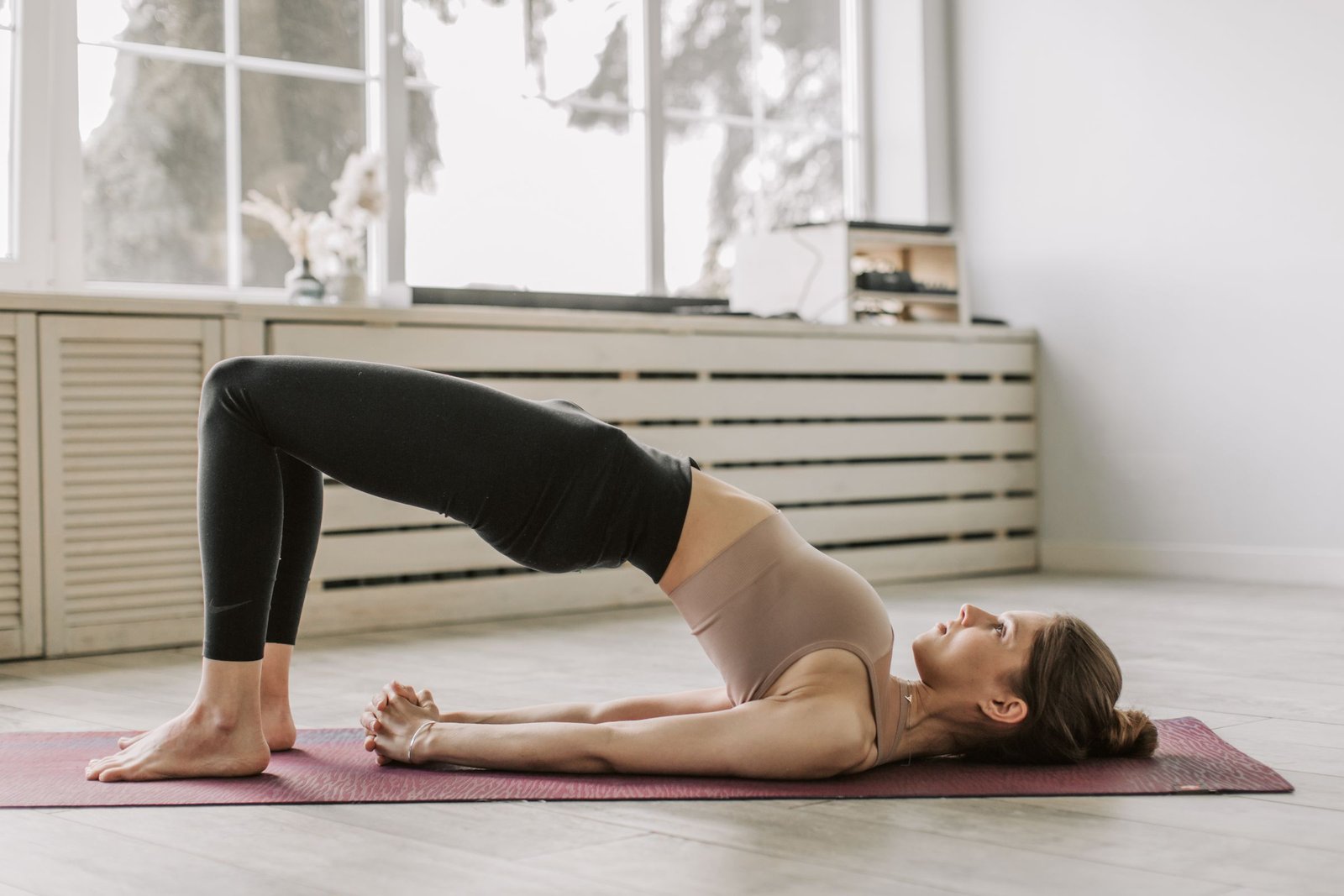
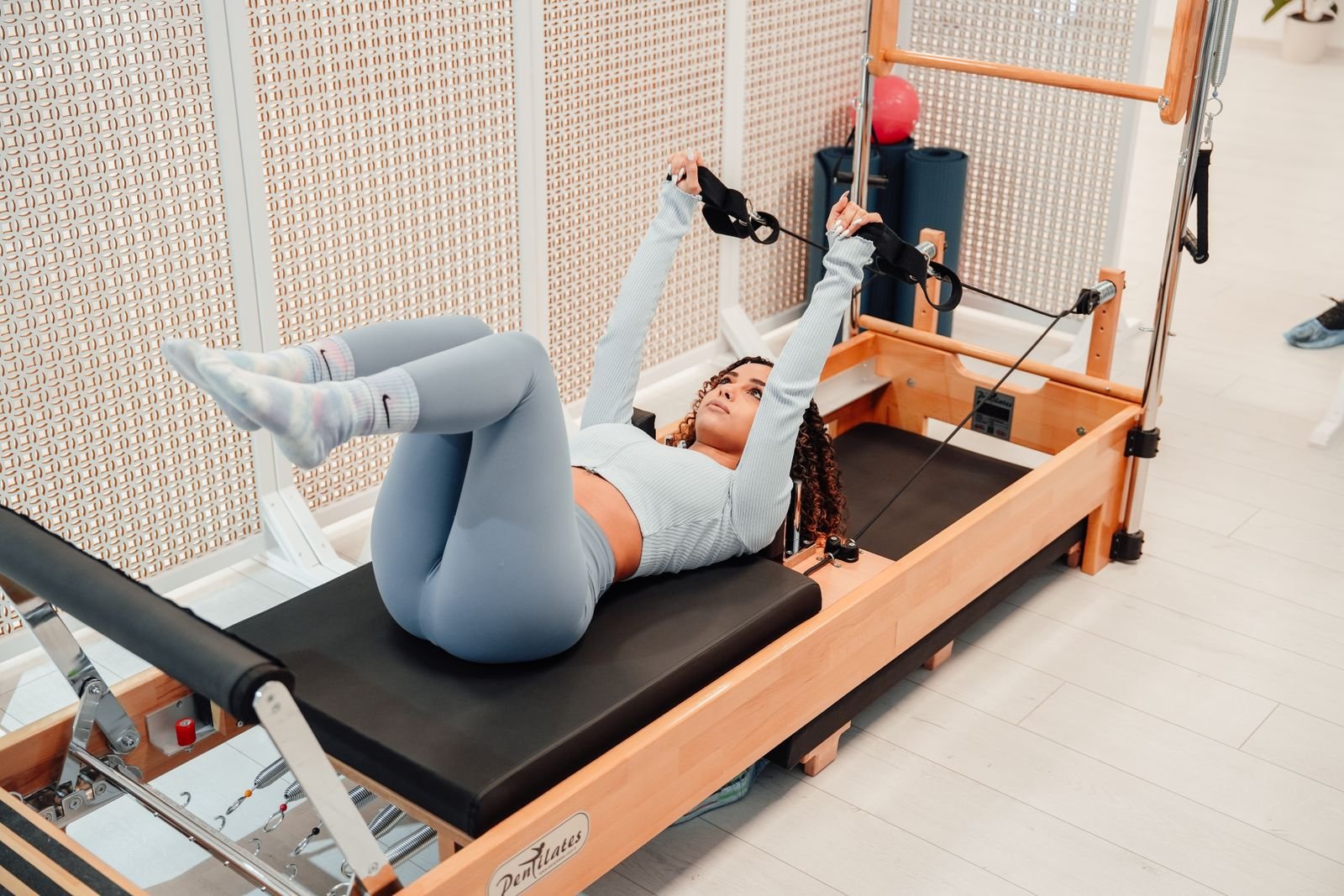
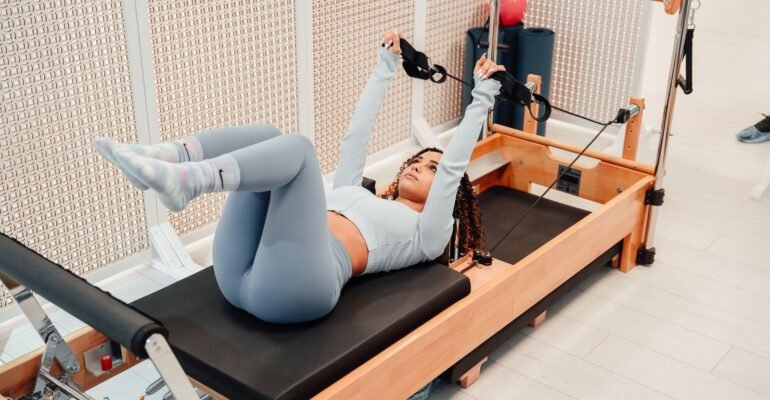
Direct answer: Mat Pilates mainly organises movement against body weight and gravity, while a Reformer adds a moving carriage, springs, straps and a footbar. These features can change resistance, assistance, stability demands and sensory feedback. Neither format is automatically easier, harder, safer or more effective: the exercise set-up determines the demand.
The apparatus does not decide the goal
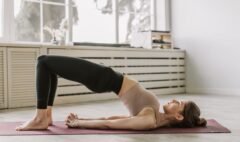
Both formats can be used to develop movement control, trunk function, mobility, strength and coordination. A systematic review defining Pilates found that contemporary practice may be mat-based or use specialised equipment. That supports two formats within one broad method; it does not establish a hierarchy between them.
The useful question is therefore not “Which machine is better?” but “What mechanical problem does this set-up ask the participant to solve?”
Four variables that change the exercise
| Variable | Mat | Reformer |
|---|---|---|
| External force | Body weight, gravity and optional props dominate. | Springs and straps add a direction-specific force alongside gravity. |
| Support | The floor provides a large, stable contact surface. | The carriage, footbar and straps can support a task—or reduce available support. |
| Stability | The surface is normally fixed. | A moving carriage can add a control demand, depending on spring setting and position. |
| Feedback | Feedback comes mainly from the floor, props and the instructor. | Carriage movement and spring tension provide additional information about force and symmetry. |
Why a lighter spring is not always easier
A spring can resist movement in one phase and assist it in another. Lower tension may reduce the force needed to move the carriage, yet it can also make the platform less stable and demand more control. Higher tension can increase resistance, but may stabilise the carriage or support body weight in a particular exercise.
A small 2024 electromyography study in 18 healthy women illustrates this interaction. During three Reformer exercises, lower-resistance conditions increased the activity of several measured trunk muscles compared with a fixed or moderately resisted platform. This is emerging evidence, not a universal programming rule: muscle activity in a small laboratory sample does not by itself establish long-term strength, safety or clinical benefit.
Force direction matters as much as spring tension
During Reformer footwork or leg extension, spring resistance is only part of the mechanical problem. The direction in which the participant pushes into the footbar changes the external force vector and, therefore, the joint moments that muscles must balance. In a biomechanical study of 15 adults, Cantergi and colleagues identified two different hip–knee moment strategies during the same Reformer leg extension.
For instructors, this means that similar-looking carriage movement can conceal a different muscular strategy. Observe foot pressure, knee tracking, pelvic control and the intended line of force; do not infer the training effect from spring count or exercise name alone.
How to read EMG findings
Surface electromyography (EMG) estimates electrical activity at the recording site during a task. It does not directly measure joint load, tissue stress, movement quality, energy expenditure or future strength gain. Dias and colleagues found greater external-oblique activity during the concentric phase of Longspine on the Mat than on the Reformer in 16 healthy women. Their Teaser comparison did not include the Reformer.
In another study of 15 experienced female practitioners, Werba and colleagues found no significant difference between Mat and Reformer Teaser for the four muscles measured. These findings are not contradictory: the exercise, movement phase, assistance, force direction and muscles selected for measurement all changed. EMG can inform analysis of a specific set-up; it cannot rank an entire Pilates format.
Do head-to-head trials show a winner?
Direct comparisons exist, but they do not justify a universal hierarchy. An eight-week randomised trial involving 38 people with multiple sclerosis found broadly similar gains between Mat and Reformer groups for most measured outcomes, with a greater improvement in trunk-flexor strength in the Reformer group. A 2025 study involving 30 amateur male footballers reported improvements with both formats and larger Reformer gains in selected agility, passing and hop measures.
Both studies were small and involved very specific populations and programmes. They can generate useful questions about programme specificity, but they cannot establish general superiority for the public, clinical populations or instructor education. No high-certainty evidence synthesis establishes either format as generally superior.
A practical movement-analysis sequence
EFWA educational framework: instructors can analyse a Mat or Reformer exercise in six steps. This is a teaching aid developed by EFWA, not an international consensus standard.
- Define the goal: strength, mobility, control, balance, skill or confidence.
- Map the forces: gravity, spring direction, body weight and contact points.
- Identify support: what is stabilised, moving or carrying load?
- Choose assistance or resistance: decide what the spring or prop should make possible.
- Observe the response: technique, breathing, effort, symptoms and recovery.
- Progress one variable: alter range, load, base of support, tempo or complexity deliberately. See EFWA’s progressive overload guide for a broader training-science framework.
This sequence helps prevent spring colour, exercise name or equipment prestige from replacing professional reasoning. Spring systems also differ between manufacturers, so settings should be interpreted on the apparatus being used.
Evidence limitations
Direct Mat-versus-Reformer studies are few, often small and population-specific. Electromyography measures electrical activity, not exercise quality or future adaptation. Biomechanical observations explain how demand may change; they do not guarantee a particular health outcome.
Continue learning
Meet the EFWA Academic Team or compare EFWA’s Pilates education pathways to see how applied anatomy and movement reasoning connect with instructor development.
Author disclosure: Dr Onen is EFWA’s Founder and Academic Director. EFWA provides Pilates education. No independent reviewer is named for this article.

Related reading
References
- Bulguroglu, I., Guclu-Gunduz, A., Yazici, G., Ozkul, C., Irkec, C., Nazliel, B., & Batur-Caglayan, H. Z. (2017). The effects of Mat Pilates and Reformer Pilates in patients with multiple sclerosis: A randomized controlled study. NeuroRehabilitation, 41(2), 413–422. https://doi.org/10.3233/NRE-162121
- Cantergi, D., Loss, J. F., Jinha, A., Brodt, G. A., & Herzog, W. (2015). Muscle strategies for leg extensions on a “Reformer” apparatus. Journal of Electromyography and Kinesiology, 25(2), 260–264. https://doi.org/10.1016/j.jelekin.2014.08.016
- Dias, J. M., de Oliveira Menacho, M., Mazuquin, B. F., Obara, K., Mostagi, F. Q. R. C., Lima, T. B., Moura, F. A., Abrão, T., Iversen, M. D., & Cardoso, J. R. (2014). Comparison of the electromyographic activity of the anterior trunk during the execution of two Pilates exercises—Teaser and Longspine—for healthy people. Journal of Electromyography and Kinesiology, 24(5), 689–697. https://doi.org/10.1016/j.jelekin.2014.06.005
- Kim, H.-J., Sung, J.-H., Ryu, J.-K., Jung, H.-C., & Wang, J. (2024). Effect of Reformer spring resistance modifications on core muscle activity during basic core muscle exercises. Healthcare, 12(23), 2447. https://doi.org/10.3390/healthcare12232447
- Wells, C., Kolt, G. S., & Bialocerkowski, A. (2012). Defining Pilates exercise: A systematic review. Complementary Therapies in Medicine, 20(4), 253–262. https://doi.org/10.1016/j.ctim.2012.02.005
- Werba, D. da R., Cantergi, D., Franzoni, L. T., Fagundes, A. de O., Loss, J. F., & Haas, A. N. (2017). Electrical activity of powerhouse muscles during the Teaser exercise of Pilates using different types of apparatus. Perceptual and Motor Skills, 124(2), 452–461. https://doi.org/10.1177/0031512516684079
- Xu, M., Tian, C., Wang, Y., Liang, S., Wang, Y., Li, X., & Yang, K. (2023). Pilates and multiple health outcomes: An umbrella review. Journal of Science and Medicine in Sport, 26(4–5), 232–240. https://doi.org/10.1016/j.jsams.2023.03.011
- Yılmaz, O., Kaplan, T., & Batalik, L. (2025). Randomised controlled study on the effects of Pilates exercises in soccer: Comparing Mat and Reformer methods on physical and technical performance. PLOS ONE, 20(5), e0324129. https://doi.org/10.1371/journal.pone.0324129