Does Pilates Count Towards Your Weekly Cardio?

By Dr Mert Eray Onen · ORCID: 0000-0001-8510-7293
Estimated reading time: 6 minutes
Pilates can contribute to your weekly aerobic activity target when the activity reaches moderate or vigorous intensity for you. However, booking an hour of Pilates does not automatically give you an hour of cardio. The useful question is what you actually do during the session and how demanding it is, rather than whether the timetable calls it matwork, reformer or “dynamic Pilates”.
This matters when Pilates is the main activity in a busy week. You may enjoy the classes, practise regularly and still be unsure whether to add walking, cycling or another aerobic activity. There is no need to downgrade Pilates to answer that question. Separate the purpose of the class from the particular target you are trying to meet.
What the weekly target actually asks for
The NHS advises adults aged 19–64 to accumulate at least 150 minutes of moderate-intensity activity, 75 minutes of vigorous activity, or an equivalent combination each week. It also recommends strengthening activities involving the major muscle groups on at least two days. These are related but distinct parts of an active week (NHS, 2024).
Pilates appears among the NHS examples of strengthening activities. That is not a statement that every Pilates lesson fulfils every part of the guidance. The NHS specifically notes that strengthening activities are not always aerobic. For planning purposes, ask two questions: what muscular work did this session provide, and how much activity reached the relevant aerobic intensity?
Nor should the target become a pass-or-fail judgement on movement. The World Health Organization emphasises that some activity is better than none and that all physical activity counts towards being more active (WHO, 2024). A useful light session does not become worthless because it contributes little to the moderate-intensity total.
What Pilates research can—and cannot—tell us
A 2026 exploratory review brought together six studies of Pilates energy expenditure and metabolic intensity. It found light-to-moderate intensity overall, with very low- to low-certainty evidence. Its pooled estimates changed when less reliable studies were excluded; the authors caution that an average across such different protocols may not describe any actual class (Vitor et al., 2026).
A different question is whether repeated Pilates training can improve cardiorespiratory fitness. A 2019 systematic review reported improvements across the programmes studied, but included varied designs and participants (Fernández-Rodríguez et al., 2019). An improvement after a training programme does not establish that every minute of every lesson qualifies as moderate aerobic activity.
That distinction helps an instructor explain apparently conflicting headlines. “Pilates can improve fitness” and “do not automatically count the whole class as cardio” can both be reasonable statements. One concerns adaptation over time; the other concerns how to record the activity performed today.
Check the effort, not the class label
The CDC describes moderate relative intensity as roughly five or six on a zero-to-ten effort scale. A practical sign is being able to talk but not sing; during vigorous activity, speaking more than a few words becomes difficult without pausing for breath. Relative intensity depends on the person, so the same activity can represent different demands for different participants (CDC, 2025).
Apply those clues thoughtfully in Pilates. EFWA’s teaching suggestion is to ask about overall effort during an appropriate pause, rather than interrupting a carefully coordinated movement with a speaking test. A learner might say, “My thighs were working hard, but my breathing stayed easy.” That is useful information; it should prompt a conversation about the exercise’s purpose, not an automatic cardio label.
A breathing instruction is also different from an observation about exertion. Counting a prescribed exhalation does not, by itself, measure aerobic intensity. If heart-rate information is part of the discussion, our guide to heart-rate zones and exercise intensity explains the context needed to interpret it.
Three ways to review a real week
The following are illustrative planning examples, not tested exercise prescriptions. They show how to avoid filling an activity diary with assumptions.
Three classes, but no clear intensity information
Alex attends three 50-minute mat classes. The diary contains 150 minutes of Pilates, but Alex cannot describe how much involved moderate aerobic effort. Record the attendance accurately. Leave the aerobic contribution uncertain until the sessions have been discussed or observed, rather than turning the booking duration into a precise physiological measurement.
Pilates alongside a separate aerobic routine
Sam values two weekly Pilates classes for practising movement and wants a straightforward way to plan aerobic activity. Five 30-minute walks would total 150 minutes if they actually reach moderate intensity for Sam. The example does not prescribe that starting workload to everyone; it shows how a separate activity can make the weekly plan easier to account for without changing the Pilates classes.
A mixed class with different sections
Jo attends a 60-minute session containing instruction, slower practice and a more demanding movement sequence. Suppose only 15 minutes can reasonably be identified as moderate aerobic activity for Jo: record those 15 minutes towards that target, rather than all 60. If the estimate remains unclear, acknowledge it. For questions about combining formats, see our discussion of Pilates fusion classes.
Keep the lesson’s purpose intact
EFWA’s educational position is that a class should not be hurried merely to make its diary entry look more impressive. An instructor can describe its intended focus, invite feedback and explain what remains to be covered elsewhere in the week. A learner who wants more aerobic activity does not necessarily need a faster version of the same lesson.
This is general exercise education for adults, not a clinical exercise prescription. Instructors should work within their competence and any individual restrictions or clinical advice already in place. A class name cannot establish suitability for a person with particular health needs.
Evidence limitations
The research does not support a universal conversion from “Pilates minutes” to “cardio minutes”. The 2026 review had a small, heterogeneous evidence base, mainly involving healthy young adults. The older fitness review examined different programmes and study designs. Neither establishes a reliable classification for every contemporary class, participant or setting. Our diary examples are practical interpretations of the guidance, not validated assessment tools.
Explore the Pilates Knowledge Hub for further explanations of movement and teaching. If instructor education is your next step, EFWA’s Pilates teacher-training options provide course information to compare with your learning needs.
References
Centers for Disease Control and Prevention. (2025, December 4). How to measure physical activity intensity. https://www.cdc.gov/physical-activity-basics/measuring/index.html
Fernández-Rodríguez, R., Álvarez-Bueno, C., Ferri-Morales, A., Torres-Costoso, A. I., Cavero-Redondo, I., & Martínez-Vizcaíno, V. (2019). Pilates method improves cardiorespiratory fitness: A systematic review and meta-analysis. Journal of Clinical Medicine, 8(11), Article 1761. https://doi.org/10.3390/jcm8111761
NHS. (2024, May 22). Physical activity guidelines for adults aged 19 to 64. https://www.nhs.uk/live-well/exercise/physical-activity-guidelines-for-adults-aged-19-to-64/
Vitor, G. B. B., de Oliveira, L. C., Pessôa, R. A. G., Aguiar, A. F., & de Oliveira, R. G. (2026). Metabolic intensity and energy cost of Pilates exercises: An exploratory systematic review and meta-analysis of limited and heterogeneous evidence. Systematic Reviews, 15, Article 42. https://doi.org/10.1186/s13643-025-03056-y
World Health Organization. (2024, June 26). Physical activity. https://www.who.int/news-room/fact-sheets/detail/physical-activity
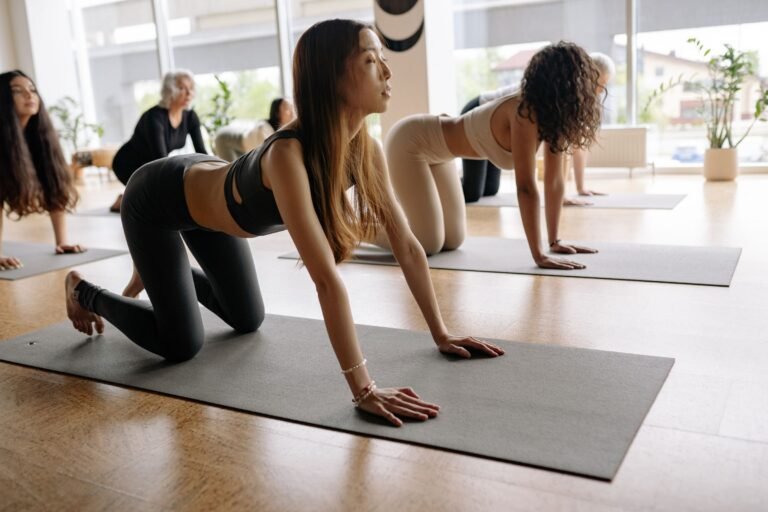
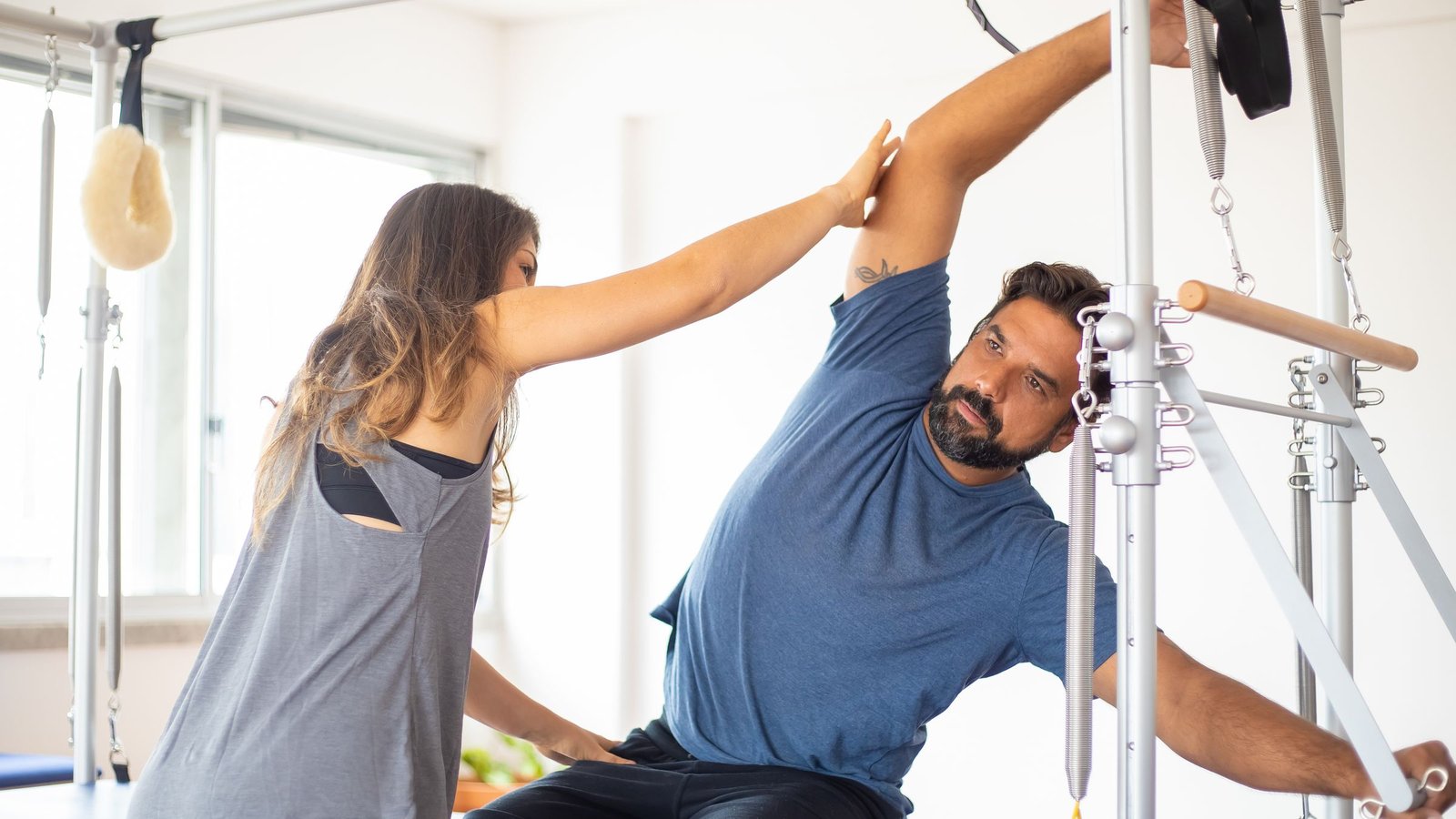
Photo: Kampus Production / Pexels, used under the Pexels licence. Illustrative Pilates session; a photograph cannot establish exercise intensity.