Can Pilates Help Low Back Pain? What the Evidence Actually Says

EFWA Pilates Knowledge
Can Pilates Help Low Back Pain? What the Evidence Actually Says
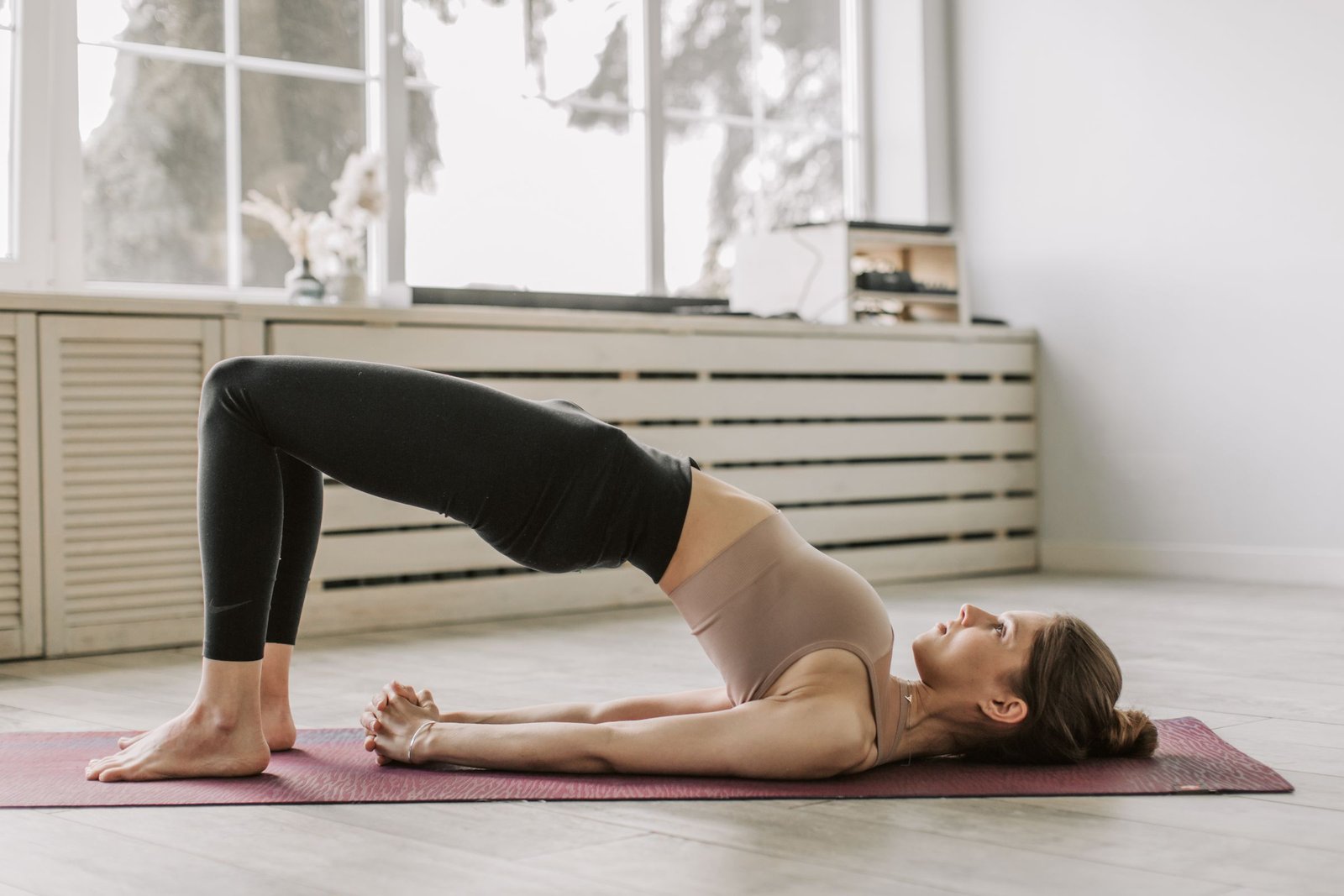
Direct answer: Pilates can be a reasonable exercise option for some adults with chronic non-specific low back pain. Systematic reviews suggest it may improve pain and disability compared with minimal intervention or some general exercise programmes. However, current evidence does not show that Pilates is consistently superior to every other appropriate form of exercise.
Evidence for chronic non-specific low back pain
Exercise is commonly recommended as part of care for persistent low back pain. NICE guidance does not prescribe one universal method: it allows biomechanical, aerobic, mind–body or combined exercise, chosen around the person’s needs, preferences and capabilities.
Within that wider exercise picture, Pilates is a plausible active option. A 2023 systematic review of 11 randomised trials found low-certainty evidence favouring Pilates over general exercise for pain, but very-low-certainty or equivalent findings in other head-to-head comparisons. The authors concluded that there was no strong evidence for choosing one exercise type over another.
A larger 2022 network meta-analysis ranked Pilates highly for chronic low back pain outcomes. That finding is encouraging, but a ranking based partly on indirect comparisons is not proof that Pilates will outperform all alternatives for every participant. A 2024 review also reported favourable results, particularly against no exercise, while noting variation across programmes and studies.
Who the findings apply to
Most research concerns adults with chronic primary or chronic non-specific low back pain: pain lasting more than three months that is not explained by another underlying disease or condition. “Non-specific” does not mean imaginary, minor or identical from one person to another. It describes a broad clinical category rather than a single tissue diagnosis.
These findings should not be assumed to apply to a new acute episode, recent trauma, post-operative rehabilitation, inflammatory disease, infection, cancer-related pain or progressive neurological symptoms. Those situations may require a different assessment and management pathway.
Magnitude and certainty of the average benefit
Across exercise methods, a 2021 Cochrane review found moderate-certainty evidence that exercise probably reduces pain compared with no treatment, usual care or placebo. Average improvements in functional limitation were smaller. A review commissioned for the World Health Organization reached a similar overall conclusion for structured exercise, while its Pilates-specific comparisons were predominantly very-low-certainty evidence.
A 2024 Bayesian network meta-analysis ranked Pilates favourably for pain. This is useful for hypothesis-building and shared decision-making, but modelled rankings are not a universal prescription. Reviews also overlap in the trials they include, so several positive reviews should not be read as several completely independent bodies of evidence.
Plausible mechanisms without structural overclaiming
Trials tell us whether outcomes changed; they rarely prove one mechanism. Plausible contributors include repeated exposure to tolerable movement, improved trunk and hip capacity, greater confidence, less fear of activity, better body awareness and consistent practice in a supportive setting. These are reasonable explanations, but they remain expert interpretation rather than proof that one mechanism explains every response.
What Pilates does not prove or “correct”
Back pain is not explained by one weak muscle, one posture or one spinal shape. Improvement after Pilates does not demonstrate that a disc has been “put back”, that a pelvis has been permanently realigned, or that a specific muscle was the sole cause of pain. These explanations can sound convincing while exceeding the evidence.
It is also important to separate an exercise effect from a treatment claim. A Pilates instructor can teach and adapt exercise within their competence. Diagnosing a condition, promising pain relief or presenting a class as a substitute for healthcare assessment crosses a different professional boundary.
Practical application for instructors
For a participant with an established diagnosis of chronic non-specific low back pain and appropriate clearance, the teaching goal is not to find one “perfect” movement. It is to build tolerable, progressively challenging movement that the person can perform consistently.
- Start with the person, not the diagnosis label. Ask about current symptoms, aggravating activities, goals and previous exercise experience.
- Use symptoms as information. Reduce range, load, speed or complexity when needed, and monitor the response during and after the session.
- Progress more than repertoire. Progression can involve control, resistance, balance, range, volume or confidence—not simply adding advanced exercises.
- Change one variable deliberately. Range, leverage, resistance, repetitions, tempo, balance demand and weekly frequency can all alter the dose. Record the response rather than progressing by appearance alone; EFWA’s progressive overload guide explains this decision in more detail.
- Check the later response. A tolerable session does not guarantee a tolerable dose. Ask about symptoms, confidence and function later that day and the next day, then adjust accordingly.
- Avoid fear-based cueing. Statements such as “never flex your spine” or “your core is switched off” may create unnecessary concern.
- Refer when appropriate. New or worsening neurological symptoms, major trauma, unexplained systemic symptoms, or a material change in a known condition require suitable clinical assessment.
EFWA educational interpretation: when several appropriate exercise options exist, adherence, individual preference and a well-judged progression may matter more than defending one method as universally best.
An instructor decision pathway
EFWA’s practical position is to organise a session around observable response rather than a promise to correct a specific structure. The following four-step pathway is an educational decision aid, not a diagnostic tool.
- Screen the situation: establish whether the person has been appropriately assessed where needed, clarify current guidance and refer new, severe or concerning symptoms rather than interpreting them.
- Define a functional aim: agree a task such as tolerating a class position, moving with greater confidence or completing a manageable amount of exercise. Avoid promising that one exercise will “put the spine back” or treat an assumed lesion.
- Choose an adjustable starting dose: select a tolerable range, tempo, support and volume. Change one main variable at a time so the response can be interpreted.
- Review during and after the session: combine the participant’s report with movement quality, confidence and next-day response. Continue, regress, progress or refer according to that pattern rather than a rigid repertoire order.
This approach preserves the instructor’s role: teaching and adapting exercise while leaving diagnosis, treatment and medication decisions to appropriately qualified healthcare professionals.
Evidence limitations
“Pilates” is not a single standardised dose. Studies differ in exercise selection, supervision, frequency, duration and comparison groups. Many trials are small, and certainty ranges from very low to moderate. The findings apply mainly to studied groups with chronic non-specific low back pain; they should not be generalised to every cause of back pain or every individual.
Continue learning
EFWA’s Academic Team supports evidence-informed teaching and clear professional boundaries. Instructors and students can also compare EFWA’s Pilates education pathways without treating a course page as clinical guidance.
This article is an educational overview, not a clinical guideline or individual medical advice.
Author disclosure: Dr Onen is EFWA’s Founder and Academic Director. EFWA provides Pilates education.

Related reading
References
- Fernández-Rodríguez, R., Álvarez-Bueno, C., Cavero-Redondo, I., Torres-Costoso, A., Pozuelo-Carrascosa, D. P., Reina-Gutiérrez, S., Pascual-Morena, C., & Martínez-Vizcaíno, V. (2022). Best exercise options for reducing pain and disability in adults with chronic low back pain: Pilates, strength, core-based, and mind-body. A network meta-analysis. Journal of Orthopaedic & Sports Physical Therapy, 52(8), 505–521. https://doi.org/10.2519/jospt.2022.10671
- Hayden, J. A., Ellis, J., Ogilvie, R., Malmivaara, A., & van Tulder, M. W. (2021). Exercise therapy for chronic low back pain. Cochrane Database of Systematic Reviews, 2021(9), CD009790. https://doi.org/10.1002/14651858.CD009790.pub2
- Liang, Z., Tian, S., Wang, C., Zhang, M., & Guo, H. (2024). The best exercise modality and dose for reducing pain in adults with low back pain: A systematic review with model-based Bayesian network meta-analysis. Journal of Orthopaedic & Sports Physical Therapy, 54(5), 315–327. https://doi.org/10.2519/jospt.2024.12153
- National Institute for Health and Care Excellence. (2016, updated 2026). Low back pain and sciatica in over 16s: Assessment and management (NG59). NICE recommendations
- Verville, L., Ogilvie, R., Hincapié, C. A., Southerst, D., Yu, H., Bussières, A., Gross, D. P., Pereira, P., Mior, S., Tricco, A. C., Cedraschi, C., Brunton, G., Nordin, M., Connell, G., Wong, J. J., Shearer, H. M., Lee, J. G. B., Wang, D., Hayden, J. A., & Cancelliere, C. (2023). Systematic review to inform a World Health Organization clinical practice guideline: Benefits and harms of structured exercise programs for chronic primary low back pain in adults. Journal of Occupational Rehabilitation, 33, 636–650. https://doi.org/10.1007/s10926-023-10124-4
- World Health Organization. (2023). WHO guideline for non-surgical management of chronic primary low back pain in adults in primary and community care settings. https://www.who.int/publications/i/item/9789240081789
- Patti, A., Thornton, J. S., Giustino, V., Drid, P., Paoli, A., Schulz, J. M., Palma, A., & Bianco, A. (2024). Effectiveness of Pilates exercise on low back pain: A systematic review with meta-analysis. Disability and Rehabilitation, 46(16), 3535–3548. https://doi.org/10.1080/09638288.2023.2251404
- Wong, C. M., Rugg, B., & Geere, J.-A. (2023). The effects of Pilates exercise in comparison to other forms of exercise on pain and disability in individuals with chronic non-specific low back pain: A systematic review with meta-analysis. Musculoskeletal Care, 21(1), 78–96. https://doi.org/10.1002/msc.1667