How Much Flexibility Do You Need for Yoga?

EFWA KNOWLEDGE HUB · YOGA FOUNDATIONS
By Dr Mert Eray Onen, Founder & Academic Director, EFWA · ORCID 0000-0001-8510-7293
Estimated reading time: 6 minutes
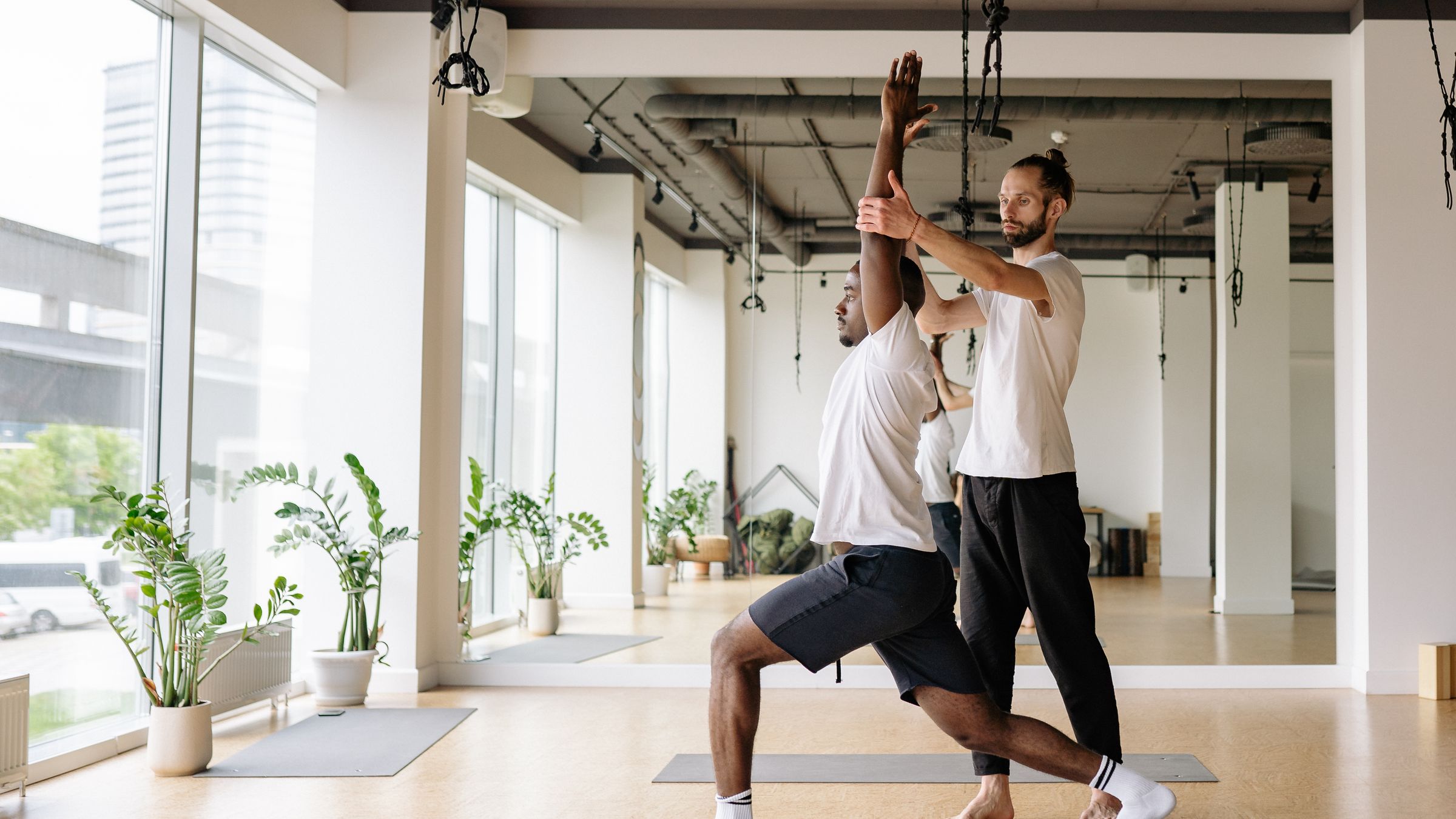
You do not need exceptional flexibility to begin yoga. You need enough comfortable, controllable range for the version of the posture you are practising. Flexibility can improve with regular practice, but more range is not automatically better; its value depends on whether the student can use it with control and whether it serves a meaningful movement goal.
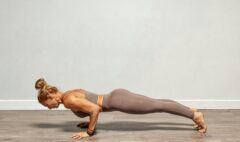
Images of advanced postures can make yoga look like a flexibility test. In teaching, that assumption causes two problems. Less flexible students may believe they do not belong, while already mobile students may chase ever-larger ranges without developing strength or control. A better question is not “How far can this person go?” but “What range can they use well, today?”
What does flexibility actually mean?
Flexibility is commonly described through joint range of motion, but a range measurement is not a property of one muscle alone. It reflects joint structure, the behaviour of muscles and tendons, the nervous system, the person’s tolerance of the stretching sensation, the testing position and the method used to measure the endpoint.
This distinction matters because two students can reach a similar shape for different reasons, and the same student’s range can change without a large structural change in tissue. Acute stretching often increases range partly through reduced resistance and a greater willingness to tolerate the sensation at the endpoint. With repeated training, structural adaptations can also occur, but their size depends on the programme.
How does range of motion improve over time?
A 2024 systematic review and meta-analysis found that stretch training performed for at least two weeks generally increased range of motion. Improvements occurred across several stretching approaches, and the authors did not identify one universally superior method. Frequency, intensity and total volume may influence the response, but wide variation between studies limits exact prescriptions.
Muscle architecture is part of the picture, not the whole explanation. Panidi and colleagues reviewed 19 studies and found trivial increases in resting fascicle length and small increases when the muscle was measured during stretching. Larger structural changes were associated with higher stretching volumes and intensities. Most evidence came from healthy, relatively young participants and often from the ankle, so it should not be generalised to every joint or yoga population.
Range can also improve through strength training performed through a suitable range. A 2021 meta-analysis found no clear difference between strength training and stretching for improving joint range of motion in the included trials. For yoga teaching, this supports an important practical idea: flexibility work does not have to be passive. Controlled transitions, isometric effort and strength at longer muscle lengths may help students make a range usable.
Does yoga improve flexibility?
Yoga is a multimodal activity rather than a single stretching protocol. Depending on the style and sequence, it can combine sustained positions, active mobility, balance, muscular endurance, breathing and attention. Research in older adults suggests that yoga can improve lower-body flexibility alongside other aspects of physical function. For example, a systematic review of randomised trials found favourable effects on balance, lower-body flexibility and lower-limb strength compared with inactive controls, with smaller benefits for some outcomes when compared with active exercise.
That evidence supports the possibility of improvement; it does not prove that every class, posture or student will respond in the same way. “Yoga improves flexibility” is therefore a reasonable population-level statement when qualified. “This posture will lengthen a particular tissue” or “more depth is always better” is not justified by the evidence.
The EFWA RANGE framework
RANGE is an EFWA teaching aid for turning flexibility into a purposeful part of yoga practice. It is not a diagnostic or rehabilitation protocol.
R — Relevant to the goal
Define why the range matters. Does it support a particular posture, make a transition more comfortable or help the student participate in daily activity? If the only reason is to reproduce somebody else’s shape, the target may not be meaningful.
A — Active control
Ask what the student can control without collapsing into passive structures or losing breathing and balance. A slightly smaller range held with muscular support is often more useful for learning than the largest possible endpoint. Props and changes in stance can create a version in which control is visible.
N — Necessary range, not maximum range
Identify the minimum range needed for the task. Many yoga postures can be scaled through hand position, block height, knee angle or stance width. There is no requirement for all bodies to display identical geometry.
G — Gradual exposure
Increase depth, duration or complexity one variable at a time. Sensation may be present, but forceful bouncing, coercive hands-on pressure and competitive endpoint chasing are poor substitutes for progressive teaching. If a student reports pain, neurological symptoms, instability or a new limitation, stop the progression and follow an appropriate referral pathway.
E — Evaluate the response
Look beyond how deep the posture appears. Can the student enter and exit with control? Is breathing steady? Does the next movement feel better, unchanged or worse? Across weeks, use repeatable observations rather than dramatic one-session changes.
A worked teaching example: a standing forward fold
Consider a student who cannot place their hands on the floor in a standing forward fold. Treating the floor as the success criterion encourages compensation or strain. A RANGE-based approach would first clarify the goal: comfortable hip flexion and trunk control, not hand-to-floor performance.
The teacher raises the hands onto blocks, allows the knees to bend and asks the student to lengthen the spine while shifting the pelvis. The student explores a moderate range, then returns to standing with control. A second version might add a brief isometric effort—pressing the feet into the floor and maintaining tension—before easing slightly further only if the response is comfortable. Progress can be judged by smoother control, a more repeatable position or less effort, not simply centimetres gained.
For a student with ample passive range but poor control, the exercise may move in the opposite direction: reduce depth and emphasise muscular effort, balance and the transition out of the posture. The teaching decision follows the person, not an idealised photograph.
What is established, emerging and interpretive?
- Established evidence: regular stretching can increase range of motion, and yoga programmes can improve flexibility in some populations.
- Emerging evidence: the contribution of changes in stretch tolerance, stiffness and muscle architecture varies with dose, joint and population.
- EFWA educational position: instructors should value relevant, controllable range more than maximum range or visual conformity.
Breathing can support attention and pacing, but it should not be used to make exaggerated physiological claims. EFWA’s article on slow breathing in yoga explains the evidence and its limitations. Explore the EFWA Yoga Foundations Certificate or visit the EFWA Knowledge Hub for further learning.
Evidence limitations
Yoga trials differ widely in style, teacher, session frequency, participant age and the way flexibility is measured. Many stretching studies isolate one joint or muscle group and cannot reproduce the attentional, strength and balance demands of a yoga class. Most evidence reports group averages, not the best target range for an individual. Instructors should avoid using research findings to diagnose restrictions, promise injury prevention or prescribe treatment.
References
- Afonso, J., Ramirez-Campillo, R., Moscão, J., Rocha, T., Zacca, R., Martins, A., Milheiro, A. A., Ferreira, J., Sarmento, H., & Clemente, F. M. (2021). Strength training versus stretching for improving range of motion: A systematic review and meta-analysis. Healthcare, 9(4), 427. https://doi.org/10.3390/healthcare9040427
- Gothe, N. P., & McAuley, E. (2016). Yoga is as good as stretching-strengthening exercises in improving functional fitness outcomes: Results from a randomized controlled trial. The Journals of Gerontology: Series A, 71(3), 406–411. https://doi.org/10.1093/gerona/glv127
- Konrad, A., Alizadeh, S., Daneshjoo, A., Anvar, S. H., Graham, A., Zahiri, A., Goudini, R., Edwards, C., Scharf, C., & Behm, D. G. (2024). Chronic effects of stretching on range of motion with consideration of potential moderating variables: A systematic review with meta-analysis. Journal of Sport and Health Science, 13(2), 186–194. https://doi.org/10.1016/j.jshs.2023.06.002
- Panidi, I., Donti, O., Konrad, A., Dinas, P. C., Terzis, G., Mouratidis, A., Gaspari, V., Donti, A., & Bogdanis, G. C. (2023). Muscle architecture adaptations to static stretching training: A systematic review with meta-analysis. Sports Medicine – Open, 9, 47. https://doi.org/10.1186/s40798-023-00591-7
- Sivaramakrishnan, D., Fitzsimons, C., Kelly, P., Ludwig, K., Mutrie, N., Saunders, D. H., & Baker, G. (2019). The effects of yoga compared to active and inactive controls on physical function and health related quality of life in older adults: Systematic review and meta-analysis of randomised controlled trials. International Journal of Behavioral Nutrition and Physical Activity, 16, 33. https://doi.org/10.1186/s12966-019-0789-2