Does Yoga Count as Strength Training?

Yoga Foundations & Programming
Does Yoga Count as Strength Training?
Yoga can build or maintain strength when the poses create sufficient muscular effort and progress over time—but not every yoga class provides the same training stimulus.
Estimated reading time: 6 minutes
Can yoga meet your strength-training needs?
Sometimes. A yoga session can contribute to muscle-strengthening activity when major muscle groups work hard enough, often enough and with a challenge that develops as the person adapts. A gentle mobility-focused class may offer many benefits while providing little strength stimulus. A demanding sequence of supported balances, controlled transitions and long holds may provide considerably more.
The updated 2026 UK Chief Medical Officers’ guidance recommends muscle-strengthening activity involving the major muscle groups on at least two days each week. It does not require barbells or machines. Bodyweight exercise can count. The useful question is therefore not simply “Is yoga strength training?” but “Does this particular practice challenge the muscles I need to train?”
What does “strengthening” mean in practice?
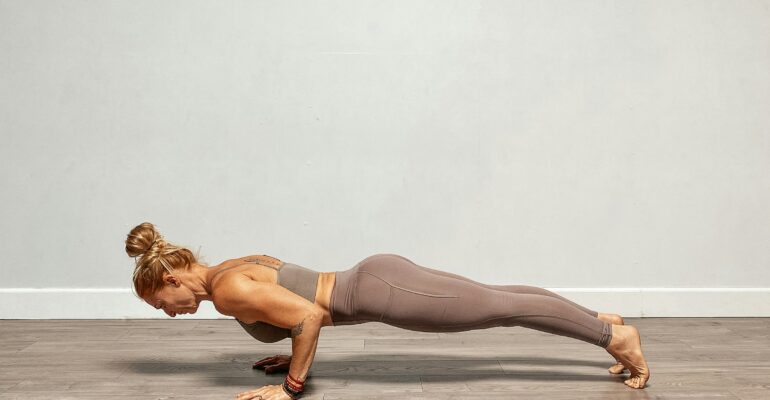
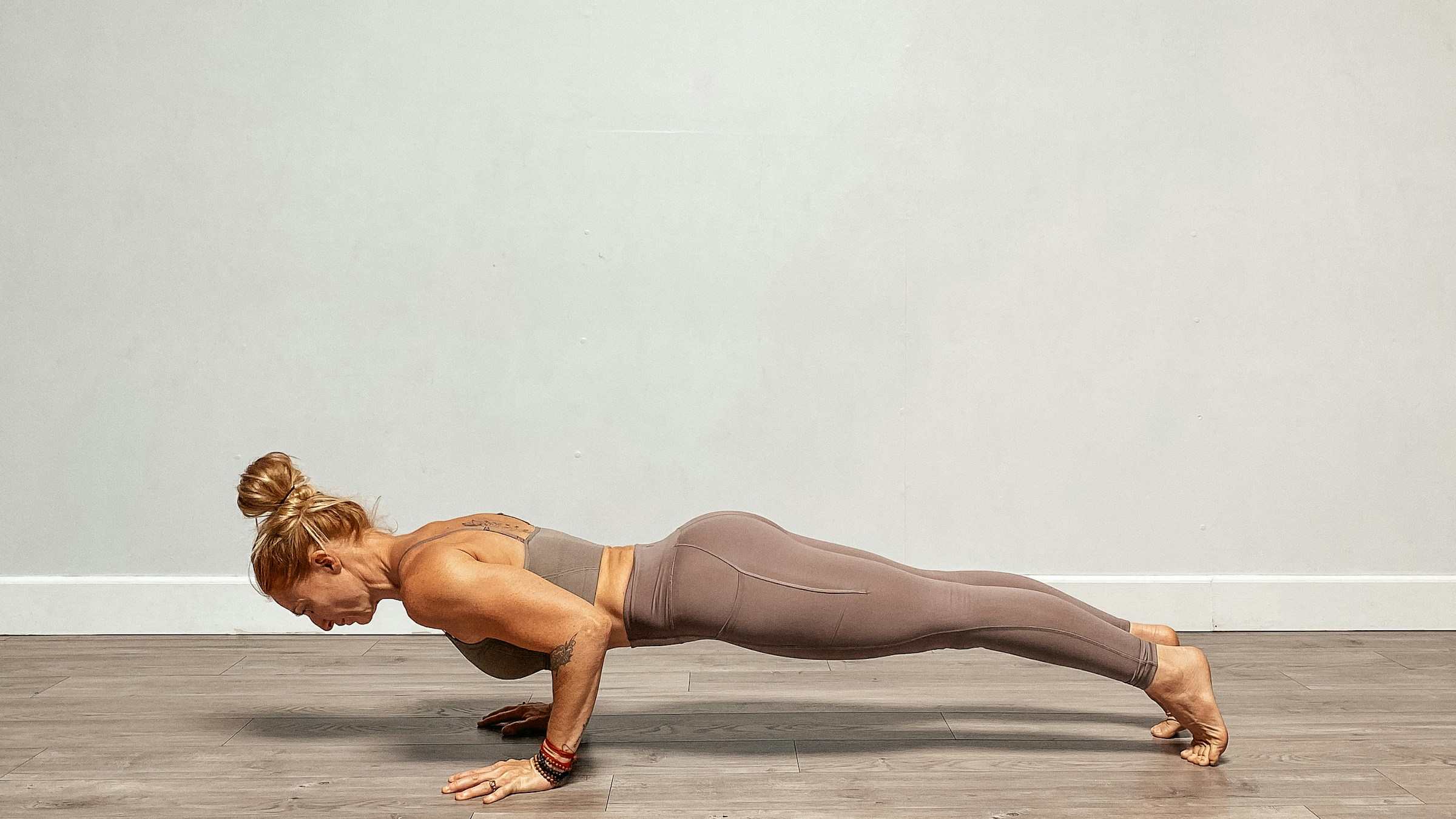
Muscles produce force to move, slow or hold the body. Yoga can ask them to do all three. Rising from a low lunge, controlling the descent towards Chaturanga Dandasana and maintaining a side plank are different muscular tasks, yet each can create meaningful effort.
However, feeling a muscle work is not the same as providing enough stimulus for continued adaptation. A pose that is demanding for a beginner may become routine after several weeks. If the challenge never changes, improvements may slow even though the movement remains valuable for skill, mobility or enjoyment.
Strength also has specific expressions. The ability to hold a static position is not identical to producing high force through a large range, and neither automatically develops power. Yoga may improve strength relevant to its own positions while leaving other capacities less challenged.
What does the research show?
Established evidence: yoga can improve selected strength outcomes
Systematic reviews in older adults have reported improvements in lower-limb strength alongside balance and flexibility. Sivaramakrishnan and colleagues (2019) found benefits compared with both inactive and active controls, while Shin’s 2021 meta-analysis also reported moderately positive effects on strength. These findings support yoga as a multimodal form of activity rather than as flexibility work alone.
That does not mean every style, class or pose produces the same result. The trials varied in duration, frequency, teaching style and participant characteristics. Many measured functional tasks such as chair stands rather than maximal strength or muscle growth.
Established evidence: strength gains require an adequate challenge
Resistance-training principles still apply when the resistance is bodyweight. The exercise must be difficult enough for the intended adaptation, involve the relevant muscles and be repeated consistently. Progress can come from changing leverage, range of motion, time under tension, tempo, support or total work. It does not require making the pose visually extreme.
Expert interpretation: yoga may be sufficient for one person and complementary for another
A novice may gain meaningful strength from foundational yoga because the exercises are new and relatively demanding. An experienced lifter may find the same session restorative but insufficient to maintain every strength quality. A practitioner who wants stronger pulling muscles may also need additional exercise, because many yoga sequences contain more pushing and weight-bearing through the hands than pulling.
EFWA’s educational position: credit yoga for the strength it genuinely develops, then identify the gaps without diminishing the practice. Clear programming is more useful than arguing over labels.
Use this four-question audit
Review an entire week of practice, not the hardest pose in a single class.
- Which major muscle groups are challenged? Look for meaningful work across the legs, hips, trunk, chest, shoulders, back and arms. A balanced health programme need not train every muscle identically, but obvious gaps should be visible.
- How hard do the working muscles have to try? The final part of a set or hold should require focused effort while technique remains controlled. If every repetition feels easy, the strength stimulus may be small.
- What progresses over time? Progress might mean a longer lever, deeper usable range, slower lowering phase, reduced support, additional repetitions or more total high-quality work. Change one variable deliberately rather than chasing complexity.
- What is still missing? Consider pulling strength, heavier lower-body loading, high-force work or power. Add complementary resistance exercise when the person’s goals require qualities that the yoga programme does not train sufficiently.
Worked example: a two-session yoga week
Imagine two 50-minute sessions built around standing poses, controlled transitions, plank variations and floor-based trunk work. The participant is new to structured exercise. In the first weeks, split squats and chair-pose variations challenge the legs; plank and Chaturanga progressions challenge the upper body and trunk. The teacher adjusts support and range so the work is difficult but controlled.
This week plausibly contributes to the participant’s muscle-strengthening activity. To keep doing so, the teacher tracks whether the movements remain challenging. A supported side plank might progress through a longer lever or longer hold. A split squat might use greater range, slower lowering or more repetitions. The purpose is not to create the most impressive pose, but to preserve an appropriate muscular demand.
After several months, the participant wants to improve pulling strength and lift heavier objects with confidence. The yoga practice offers limited pulling resistance, so one or two simple rowing patterns and progressively loaded hinge or squat exercises are added. Yoga has not “failed”; the programme has become more complete for a new goal.
How yoga teachers can communicate strength honestly
Avoid promising that one sequence “tones every muscle” or replaces all other training. Instead, describe the actual demand: “This sequence develops controlled lower-body and pushing strength” is useful and testable. Tell participants when a class is primarily restorative, mobility-focused or technique-based. Those aims are worthwhile even when strength is not the main outcome.
Offer regressions and progressions that change the load without treating difficulty as a hierarchy of personal worth. More advanced-looking is not always more effective. A smaller range with better control may provide the right challenge; a deeper position may simply shift stress to a joint or demand flexibility the participant does not need.
Yoga teachers should work within their education and professional scope. Pain, unexplained weakness, neurological symptoms or rehabilitation needs require appropriate referral rather than improvised treatment claims.
Evidence limitations
Yoga interventions vary widely, and much of the strength evidence comes from older-adult populations and functional tests. Research does not establish one universal sequence, pose intensity or weekly dose for every goal. Evidence for maximal strength, hypertrophy and power is less direct than the evidence supporting progressive resistance training.
The bottom line
Yoga can count as strength training when the session challenges major muscles and continues to progress. It need not replace resistance training, and it should not be forced into that role. Audit the muscular demand, the progression and the gaps; then build the weekly plan around the person rather than the class label.
Explore the EFWA Knowledge Hub, meet the Academic Team, review EFWA’s guide to slow breathing and physiology, or learn about the Yoga Foundations Certificate.
References
- American College of Sports Medicine. (2009). Progression models in resistance training for healthy adults. Medicine & Science in Sports & Exercise, 41(3), 687–708. https://doi.org/10.1249/MSS.0b013e3181915670
- Department of Health and Social Care. (2026). UK Chief Medical Officers’ physical activity guidelines. https://www.gov.uk/government/publications/physical-activity-guidelines-uk-chief-medical-officers-report/uk-chief-medical-officers-physical-activity-guidelines
- Shin, S. (2021). Meta-analysis of the effect of yoga practice on physical fitness in the elderly. International Journal of Environmental Research and Public Health, 18(21), 11663. https://doi.org/10.3390/ijerph182111663
- Sivaramakrishnan, D., Fitzsimons, C., Kelly, P., Ludwig, K., Mutrie, N., Saunders, D. H., & Baker, G. (2019). The effects of yoga compared to active and inactive controls on physical function and health related quality of life in older adults: Systematic review and meta-analysis of randomised controlled trials. International Journal of Behavioral Nutrition and Physical Activity, 16, 33. https://doi.org/10.1186/s12966-019-0789-2