Slow Breathing in Yoga: What Changes Physiologically?


EFWA Yoga & Movement Knowledge
Slow Breathing in Yoga: What Changes Physiologically?
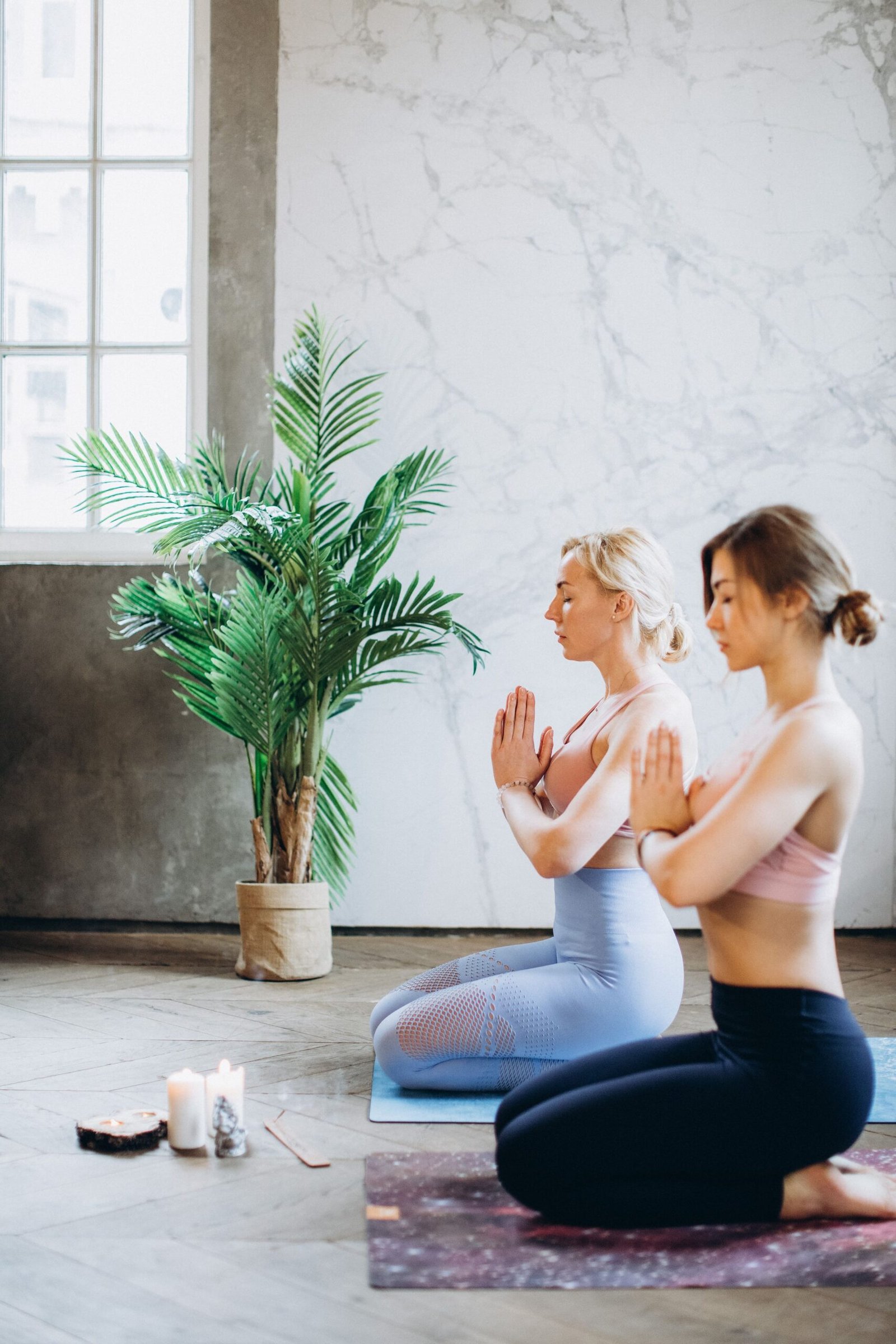
Slow breathing changes interactions between respiration, heart rate
and blood pressure. In research, breathing at roughly 5–10 breaths per
minute — often near six — usually increases breathing-linked variation
between heartbeats, may briefly lower heart rate and systolic blood
pressure, and can make some people feel calmer. These effects do not
prove that slow breathing “resets” the nervous system, increases oxygen
or treats a health condition.
Yoga teachers can use gentle, unforced slow breathing as a
self-regulation and attention skill. It should not be presented as a
cure, and it should be distinguished from breath retention, forceful
pranayama and rapid high-ventilation practices, which create different
physiological demands.
What is “slow breathing”
in the research?
Definitions vary. Many reviews describe slow-paced breathing as fewer
than 10 breaths per minute; laboratory protocols frequently use
approximately six breaths per minute. That rate is not a universal
prescription. Each person’s comfortable rate and cardiovascular
“resonance” differ, and a participant should not have to gulp air, brace
or struggle to complete the count.
Slower is not necessarily deeper. Breathing rate describes frequency;
tidal volume describes how much air moves with each breath.
Unnecessarily large breaths may increase total ventilation enough to
lower carbon dioxide and cause light-headedness, tingling or air
hunger.
Established
evidence: the immediate cardiovascular response
Heart rate normally rises slightly during inhalation and falls during
exhalation. This is called respiratory sinus arrhythmia. When breathing
is slowed, these breath-linked oscillations can become larger and more
orderly.
A systematic review and meta-analysis of 223 studies found that
voluntary slow breathing increased measures of vagally mediated
heart-rate variability (HRV) during practice, immediately afterwards and
after multi-session interventions (Laborde et al., 2022). A second
meta-analysis, covering 31 studies and 1,133 non-clinical participants,
found immediate increases in time-domain HRV, a small reduction in heart
rate and a moderate reduction in systolic blood pressure; diastolic
blood pressure did not change consistently (Shao et al., 2024).
The important nuance is that a higher HRV value during paced
breathing is partly produced by the breathing pattern itself. It should
not be translated automatically into “better vagal tone” or permanent
autonomic improvement. It is a useful physiological response, not a
complete health score.
Why does the rhythm matter?
Breathing changes pressure inside the chest and alters neural
signalling to the heart, producing respiratory sinus arrhythmia. Slowing
the rhythm gives this oscillation more time and can increase its
amplitude.
Pressure sensors in major arteries also help regulate blood pressure.
Near 0.1 Hz — about six breaths per minute — breathing, heart-rate and
blood-pressure oscillations may align more strongly, increasing
baroreflex responsiveness (Russo et al., 2017). The strongest response
rate is individual, so six is a research anchor rather than a class
rule.
Following a steady breath also directs attention towards internal
sensation. Early research suggests respiratory rhythms may influence
brain activity involved in attention and emotional regulation, but the
practical significance remains emerging evidence (Zaccaro et al.,
2018).
What about stress and mood?
The evidence is promising but less definitive than the immediate HRV
response. A meta-analysis of randomised controlled trials found
small-to-medium improvements in self-reported stress, anxiety and
depressive symptoms across varied breathwork interventions. The studies
were heterogeneous and generally carried a moderate risk of bias, so the
findings support breathwork as a possible adjunctive skill, not a
substitute for psychological or medical care (Fincham et al., 2023).
Yoga-specific studies are difficult to combine because “pranayama”
may mean slow breathing, humming, forceful breathing or retention.
Reviews report possible cardiorespiratory and psychological benefits but
call for larger, standardised trials (Jayawardena et al., 2020). A 2026
meta-analysis in people with hypertension found reduced heart rate and
possible modest blood-pressure effects, but this does not make a yoga
class a treatment for hypertension (Chidambaram et al., 2026).
A practical,
scope-aware way to teach it
For a general adult class, an instructor can introduce slow breathing
without promising a specific physiological outcome:
- Offer a supported seated or lying position and invite participants
to keep their eyes open or closed. - Begin with natural breathing. Ask for ease before asking for a
slower pace. - Offer an optional rhythm, such as a three- to four-count inhalation
and a four- to six-count exhalation. Counts are timing cues, not seconds
that everyone must achieve. - Keep the breath quiet and unforced. Nasal inhalation may be
comfortable for many people, but congestion and individual preference
matter. - Practise for about five minutes, or less initially, then return to
an unregulated breath.
The NHS similarly advises gentle, regular breathing “as deep down
into your belly as is comfortable, without forcing it”, reinforcing that
comfort is more important than volume or performance (National Health
Service, 2026).
During movement, do not force a long breathing count that conflicts
with the exercise demand. A participant should always be free to breathe
naturally, pause, change position or opt out.
Safety and professional
boundaries
Gentle slow breathing is usually low demand, but “breathwork” is not
one uniform intervention. Evidence about slow breathing should not be
used to justify prolonged retention, forceful pumping or rapid
ventilation. Published case reports of yoga-related adverse events have
included forceful breathing practices, although case reports cannot
estimate how often harm occurs (Cramer et al., 2013).
Stop the exercise and return to normal breathing if a participant
reports dizziness, tingling, marked breathlessness, chest pain,
palpitations, panic or distress. Chest pain, fainting, severe
breathlessness or symptoms that do not settle require urgent medical
assessment. Persistent, severe or otherwise unexplained symptoms also
need appropriate medical assessment. People with significant heart or
lung conditions, recurrent fainting, or symptoms triggered by breath
focus should seek guidance from a relevant healthcare professional. An
instructor should not diagnose dysfunctional breathing, alter medication
or present slow breathing as treatment for hypertension, asthma, anxiety
or another condition.
Common misconceptions
- “Slower breathing always means more oxygen.” In
healthy people, blood oxygen is usually already well maintained. Forced
over-breathing may lower carbon dioxide without meaningfully improving
oxygen delivery. - “Six breaths per minute is optimal for everyone.”
It is a common research rate, not an individualised prescription. - “A higher HRV reading proves the vagus nerve has been
strengthened.” HRV rises partly because respiration has
changed; long-term adaptation requires separate evidence. - “All pranayama has the same effect.” Slow, rapid,
resisted, alternate-nostril and retention practices are physiologically
different.
Evidence limitations
Breathing trials use different rates, instructions, populations and
comparators. Many are small, follow-up is short, and adverse-event
reporting is inconsistent. Breathing rate also changes HRV measurement
directly. The most secure conclusion concerns immediate cardiovascular
oscillations; claims about durable disease prevention, treatment or
broad mental-health effects remain less certain.
EFWA interpretation
EFWA’s educational position is to teach slow breathing as an
adjustable skill, not a physiological contest or clinical cure. Start
with comfort, distinguish slow breathing from high-ventilation and
retention practices, and let the participant’s response guide
progression. Instructors should explain what is established, what is
emerging and where referral is appropriate.
Explore the expertise behind EFWA’s evidence-informed education on
the EFWA Academic Team
page, or see how breathing, movement and professional scope are
introduced in the Yoga
Foundations Certificate.
This article is an educational overview and does not replace individual medical or professional advice.
Author disclosure: Dr Onen is EFWA’s Founder and Academic Director. EFWA provides professional education in this subject area. No independent reviewer is named for this article.

Related reading
References
Chidambaram, Y., Saravana Kumar, P., Gunasekar, S., Kundoor, L. R.,
Kuppusamy, M., Kasi, M., Chandrasekaran, A. M., Shanmugasundaram, S.,
Ramesh, S., Sadagopan, T., Naik, N., Roy, A., Prabhakaran, D., &
Senguttuvan, N. B. (2026). The effect of yogic breathing (Pranayama) on
heart rate and blood pressure in patients with hypertension: A
systematic review and meta-analysis. Indian Heart Journal,
78(3), 135–143. https://doi.org/10.1016/j.ihj.2026.01.004
Cramer, H., Krucoff, C., & Dobos, G. (2013). Adverse events
associated with yoga: A systematic review of published case reports and
case series. PLOS ONE, 8(10), e75515. https://doi.org/10.1371/journal.pone.0075515
Fincham, G. W., Strauss, C., Montero-Marin, J., & Cavanagh, K.
(2023). Effect of breathwork on stress and mental health: A
meta-analysis of randomised-controlled trials. Scientific Reports,
13, 432. https://doi.org/10.1038/s41598-022-27247-y
Jayawardena, R., Ranasinghe, P., Ranawaka, H., Gamage, N.,
Dissanayake, D., & Misra, A. (2020). Exploring the therapeutic
benefits of Pranayama (yogic breathing): A systematic review.
International Journal of Yoga, 13(2), 99–110. https://doi.org/10.4103/ijoy.IJOY_37_19
Laborde, S., Allen, M. S., Borges, U., Dosseville, F., Hosang, T. J.,
Iskra, M., Mosley, E., Salvotti, C., Spolverato, L., Zammit, N., &
Javelle, F. (2022). Effects of voluntary slow breathing on heart rate
and heart rate variability: A systematic review and a meta-analysis.
Neuroscience & Biobehavioral Reviews, 138, 104711. https://doi.org/10.1016/j.neubiorev.2022.104711
National Health Service. (2026, June 12). Breathing exercises for
stress. https://www.nhs.uk/mental-health/self-help/guides-tools-and-activities/breathing-exercises-for-stress/
Russo, M. A., Santarelli, D. M., & O’Rourke, D. (2017). The
physiological effects of slow breathing in the healthy human.
Breathe, 13(4), 298–309. https://doi.org/10.1183/20734735.009817
Shao, R., Man, I. S. C., & Lee, T. M. C. (2024). The effect of
slow-paced breathing on cardiovascular and emotion functions: A
meta-analysis and systematic review. Mindfulness, 15, 1–18. https://doi.org/10.1007/s12671-023-02294-2
Zaccaro, A., Piarulli, A., Laurino, M., Garbella, E., Menicucci, D.,
Neri, B., & Gemignani, A. (2018). How breath-control can change your
life: A systematic review on psycho-physiological correlates of slow
breathing. Frontiers in Human Neuroscience, 12, 353. https://doi.org/10.3389/fnhum.2018.00353