Can Pilates Improve Bone Health? What Instructors Should Know

Estimated reading time: 6 minutes
Direct answer: Pilates can be a useful part of a bone-health programme, particularly for strength, balance, posture and confidence. Current research does not show that Pilates alone reliably increases bone mineral density or prevents fractures. For a programme designed specifically around bone health, Pilates is best viewed alongside progressive resistance exercise, suitable weight-bearing or impact activity, balance work and any clinical treatment already recommended.
That distinction matters. “Good for bone health” can refer to several different outcomes: changing bone mineral density, preserving muscle, improving balance, reducing falls, maintaining daily function or supporting confidence after a diagnosis. One class may help some of these without proving all of them.
Bone density is only one part of the picture
Bone mineral density, usually measured by a DXA scan, is an important clinical marker. It is not the same thing as fracture risk, and neither is identical to balance or muscular strength. Age, previous fractures, medicines, nutrition, smoking, alcohol, falls and other health conditions can also influence risk.
This is why a claim such as “Pilates builds stronger bones” is too broad. A carefully designed class may challenge muscles and balance, yet provide little impact loading. Another class may include standing work and meaningful resistance. Both may be called Pilates, but the stimulus is not the same.
The 2024 UK National Osteoporosis Guideline Group guideline recommends a combination of regular weight-bearing and muscle-strengthening exercise tailored to the individual. It also advises falls assessment and balance-focused exercise where relevant. The Royal Osteoporosis Society similarly describes impact and strength exercise as the main exercise components for bone strength, with balance work helping to reduce falls risk.
What does the Pilates evidence actually show?
The Pilates-specific evidence is limited and should be interpreted cautiously.
A 2022 systematic review and meta-analysis included three randomised controlled trials in postmenopausal women. It found no statistically significant improvement in bone mineral density at the lumbar spine, total hip or femoral neck. Only one included study was judged to have satisfactory methodological quality.
A separate systematic review examined five studies involving 143 people at increased fracture risk; 99% of participants were women. It found low-certainty evidence of improvements in physical function and health-related quality of life. Effects on bone mineral density and falls were uncertain, and the review found no evidence on fractures, mortality or adverse events.
A broader 2021 review combined Pilates and yoga research in 591 adult women. The interventions did not significantly improve bone mineral density compared with control groups. The authors noted that maintenance may still be relevant in populations expected to lose bone, but this interpretation is not proof that the programmes prevented fractures.
Taken together, the established finding is modest: Pilates may support physical function, and some sessions may contain useful strengthening and balance work. The claim that Pilates itself raises bone density remains unproven.
Why the same label can hide different training doses
Bone responds to mechanical loading, but exercise names do not reveal the dose. The practical questions are more specific:
- How much external or body-weight resistance is used?
- Is the challenge progressively increased as the person adapts?
- Are the relevant body regions being loaded?
- Is there suitable weight-bearing or impact activity?
- Does the session challenge balance without creating unmanaged risk?
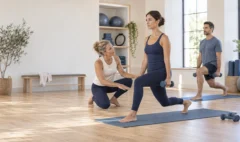
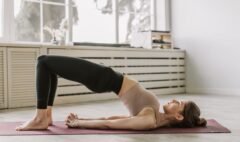
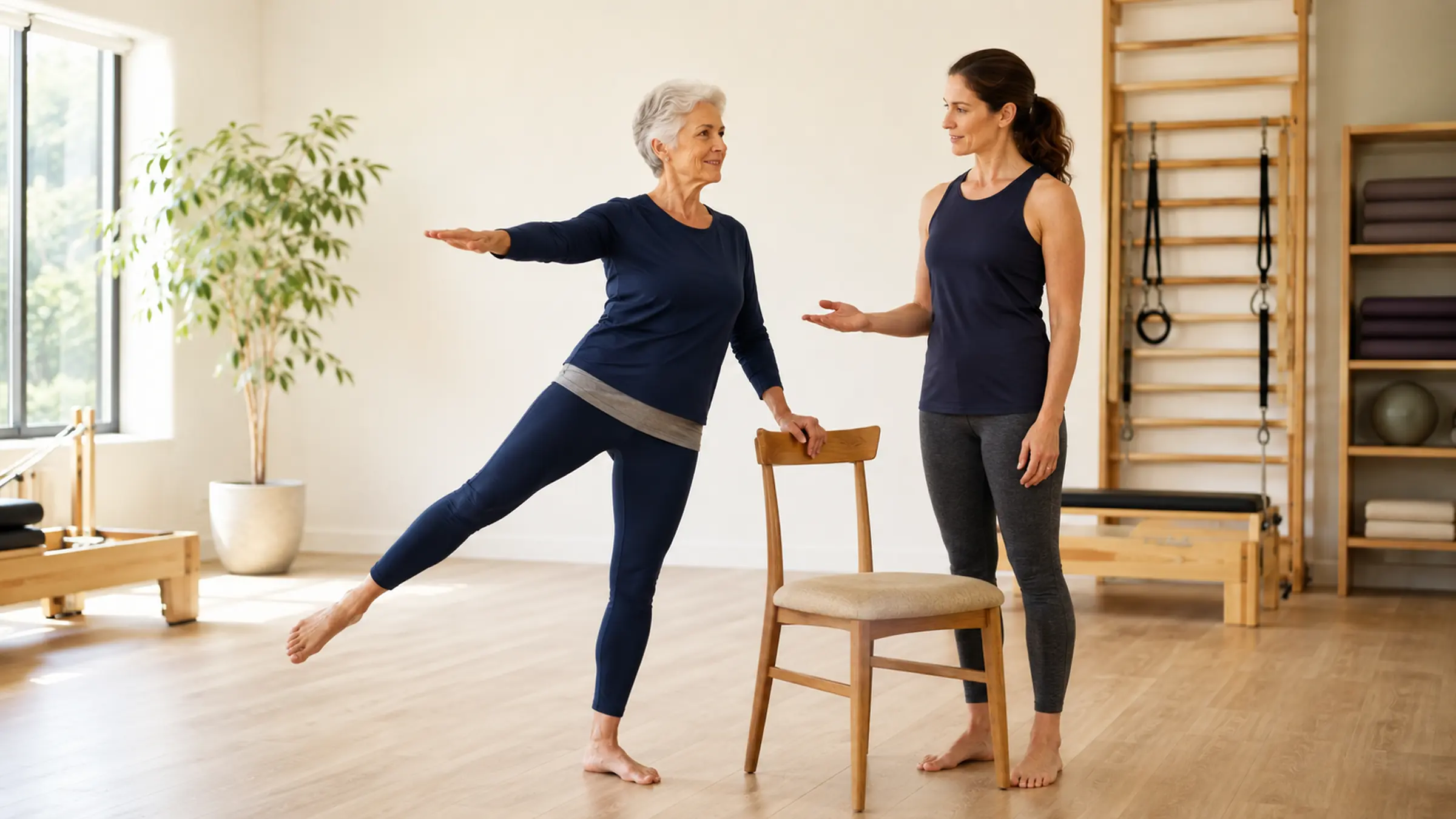
For example, a supported supine leg exercise may train control and muscular endurance while placing little impact through the hip. A standing split-stance exercise with progressive resistance may create a different demand. Neither exercise is automatically “better”; each has a different job.
This is consistent with the broader distinction between Mat and Reformer Pilates: springs, gravity, body position and stability change the task. It also explains why choosing between free weights and machines should start with the required adaptation, not loyalty to one tool.
The EFWA Bone-Health Role Map
Before describing a Pilates session as bone-focused, use four checks.
1. Load
Is there meaningful muscular resistance, and is there a safe way to progress it? More repetitions of an easy task are not always equivalent to gradually increasing resistance.
2. Feet
Does the wider weekly programme contain appropriate weight-bearing or impact activity? For some people this may include brisk walking, stair climbing or controlled heel drops; others may need a different starting point. High impact is not a universal requirement.
3. Steadiness
Does the programme train balance in a way that is challenging enough to adapt but safe enough to practise consistently? Pilates can contribute here, although balance benefits should not be converted into an unsupported promise of fracture prevention. Our review of Pilates and balance in older adults explains this distinction further.
4. Status
Is the person generally healthy, living with osteopenia, diagnosed with osteoporosis, recovering from a fracture or reporting new unexplained pain? The answer changes the instructor’s role and the need for clinical input.
The map produces three useful decisions:
- Lead: Pilates can be the main format for a general movement goal while the wider week supplies the necessary loading components.
- Complement: Pilates supports strength, balance or confidence but should sit beside progressive resistance and suitable weight-bearing activity.
- Refer and adapt: A fracture history, spinal fracture, current recovery, new severe pain or uncertainty about medical restrictions calls for guidance from the appropriate clinician before progression.
Three applied examples
A healthy 52-year-old who enjoys Pilates: Keep the class, then inspect the whole week. If resistance and weight-bearing activity are missing, add them rather than relabelling the existing session.
A 68-year-old with osteopenia and no fracture history: Pilates may support balance and function. Programme decisions should still reflect the person’s assessment, confidence, current activity and medical advice; an instructor should not infer fracture risk from age alone.
A participant with previous vertebral fractures: This is not simply a “gentler class” decision. The NOGG guideline advises care with repetitive forced spinal forward flexion, while the Royal Osteoporosis Society specifically notes that some roll-down and curl-up movements may require adaptation. The instructor should work within agreed clinical guidance rather than diagnose or prescribe treatment.
What instructors can say responsibly
A defensible description is: “This class includes strength, balance and movement practice that may support a wider bone-health plan.”
Avoid saying that Pilates reverses osteoporosis, rebuilds bone, prevents fractures or replaces prescribed treatment. Exercise professionals can screen, teach, observe, adapt and refer within their competence. Diagnosis, interpretation of DXA results, fracture-risk assessment and decisions about medicines belong to appropriately qualified clinicians.
Evidence limitations
Pilates studies in this area are few, small and predominantly involve women. Programmes vary in exercise selection, resistance, supervision and duration. Bone mineral density changes slowly, and short studies may miss meaningful long-term effects. Evidence about men, fractures, falls and adverse events is particularly limited. These gaps support careful wording; they do not mean movement is unhelpful.
The practical conclusion
Pilates can earn a valuable place in a bone-health programme without carrying the whole programme. Judge the actual loading, progression, balance challenge and participant context. Keep what Pilates does well, add missing training components, and refer when clinical decisions are required.
References
de Oliveira, R. G., Anami, G. E. U., Coelho, E. A., & de Oliveira, L. C. (2022). Effects of Pilates exercise on bone mineral density in postmenopausal women: A systematic review and meta-analysis. Journal of Geriatric Physical Therapy, 45(2), 107–114. https://doi.org/10.1519/JPT.0000000000000309
Fernández-Rodríguez, R., Alvarez-Bueno, C., Reina-Gutiérrez, S., Torres-Costoso, A., Nuñez de Arenas-Arroyo, S., & Martínez-Vizcaíno, V. (2021). Effectiveness of Pilates and yoga to improve bone density in adult women: A systematic review and meta-analysis. PLOS ONE, 16(5), e0251391. https://doi.org/10.1371/journal.pone.0251391
McLaughlin, E. C., Bartley, J., Ashe, M. C., Butt, D. A., Chilibeck, P. D., Wark, J. D., Thabane, L., Stapleton, J., & Giangregorio, L. M. (2022). The effects of Pilates on health-related outcomes in individuals with increased risk of fracture: A systematic review. Applied Physiology, Nutrition, and Metabolism, 47(4), 369–378. https://doi.org/10.1139/apnm-2021-0462
National Osteoporosis Guideline Group. (2024). Clinical guideline for the prevention and treatment of osteoporosis. https://www.nogg.org.uk/sites/nogg/download/NOGG-Guideline-2024.pdf
Royal Osteoporosis Society. (2026, June 1). Exercise for bones. https://theros.org.uk/information-and-support/exercise/exercise-for-bones/
Royal Osteoporosis Society. (2026, June 1). How to exercise safely for bones. https://theros.org.uk/information-and-support/exercise/how-to-exercise-safely-for-bones/
About the author
Dr Mert Eray Onen is Founder and Academic Director of the European Fitness and Wellness Academy (EFWA). His work spans exercise physiology, anatomy, movement education and evidence-informed professional practice. ORCID: 0000-0001-8510-7293
Explore more evidence-informed resources in the Pilates Knowledge Hub and the wider EFWA Knowledge Hub. You can also meet the EFWA Academic Team or compare EFWA’s online Pilates instructor courses.
Educational information only. This article does not diagnose osteoporosis, estimate an individual’s fracture risk or replace advice from a doctor, physiotherapist or other appropriately qualified clinician.