Can a Supplement Cause a Positive Doping Test?

EFWA KNOWLEDGE HUB · ANTI-DOPING & SPORT INTEGRITY
By Dr Mert Eray Onen, Founder & Academic Director, EFWA · ORCID 0000-0001-8510-7293
Estimated reading time: 6 minutes
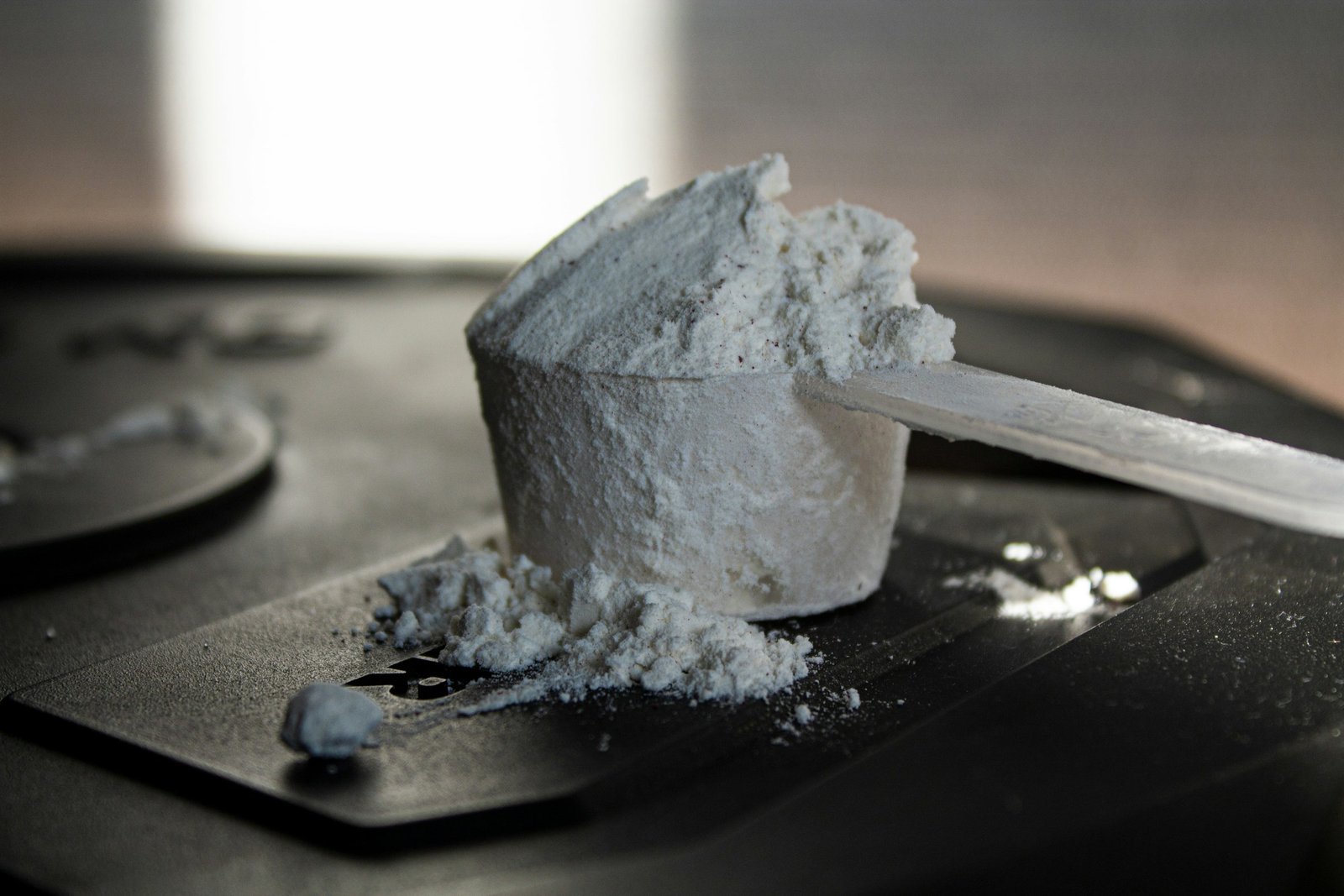
Yes. A dietary supplement can contribute to a positive doping test if it contains a prohibited substance that is undeclared, inaccurately labelled or introduced through contamination. Reading the label is necessary but not sufficient. No supplement can be guaranteed risk-free; the safest process begins by deciding whether it is needed at all.
Supplements are widely used in sport, yet the word “supplement” covers very different products: vitamins prescribed for a verified deficiency, convenient carbohydrate products, protein powders, pre-workouts, weight-loss products and multi-ingredient blends. Their potential benefit and risk are not interchangeable.
This distinction matters for athletes who may be tested. The World Anti-Doping Agency (WADA) Prohibited List is updated annually, and the 2026 List has been in force since 1 January 2026. A product’s marketing language—“natural”, “herbal”, “clean” or “approved”—does not establish that its contents comply with anti-doping rules.
In formal anti-doping terminology, a laboratory report is an adverse analytical finding (AAF). Whether it becomes an anti-doping rule violation is determined through the applicable results-management process. Under strict liability, however, an athlete is responsible for prohibited substances found in their sample regardless of intention.
How can a supplement lead to an anti-doping problem?
There are several routes. A prohibited substance may be deliberately added for a stimulant, muscle-building or weight-loss effect. It may appear on a label under an unfamiliar or incomplete name. It may be absent from the label entirely. Cross-contamination can also occur during manufacture.
Peer-reviewed reviews have repeatedly documented undeclared pharmacological substances in parts of the supplement market. The precise prevalence varies widely with the products sampled, country, year and laboratory method, so one percentage should not be applied to every supplement. The consistent conclusion is narrower: contamination and adulteration are real, and product categories marketed for rapid weight loss, intense stimulation or muscle gain deserve particular caution.
WADA explicitly advises extreme caution and states that quality-assurance schemes can reduce, but not eliminate, inadvertent-doping risk. This is why a label check alone cannot turn a product into a guarantee.
Does “batch-tested” mean completely safe?
No. Independent batch testing is a risk-reduction measure, not proof that every possible prohibited substance is absent. A meaningful check should relate to the exact product and batch, not merely the brand name. The batch number on the container should match the record in the testing programme’s database.
Even then, the decision should consider whether the potential benefit justifies the remaining risk. The International Olympic Committee consensus statement recommends a needs-based assessment and a food-first approach where practical. Some supplements have evidence for specific purposes, but only a small number have strong performance evidence in defined situations. “Some evidence exists” does not mean that every athlete needs the product.
Why can an ingredient list be misleading?
Labels may use botanical names, proprietary blends or alternative chemical terms that make interpretation difficult. Reformulation is another problem: a product bought today may not be identical to a container used months earlier. Online marketplace listings can also differ from the physical label.
A search for one familiar prohibited ingredient is therefore inadequate. Athletes should use the official anti-doping resources relevant to their sport and country, and seek advice from appropriately qualified sports dietetic, medical and anti-doping professionals. Medicine checks and supplement checks are different processes; a database that assesses medicines should not automatically be treated as certifying supplements.
The EFWA CHECK framework
CHECK is an EFWA educational framework for a structured supplement-risk conversation. It does not certify a product and does not replace advice from the athlete’s anti-doping organisation.
C — Clarify the purpose
Define the problem the athlete is trying to solve. Is there a diagnosed deficiency, a practical difficulty meeting energy needs, or a performance claim seen on social media? A vague goal such as “more energy” should trigger better assessment, not an immediate product recommendation.
H — Have food, training and recovery been reviewed?
Many perceived supplement needs are better approached through adequate food, sleep, training design or clinical investigation. This step does not dismiss supplements; it prevents them from becoming a substitute for identifying the real issue.
E — Evaluate evidence and consequences
Consider evidence for the exact ingredient, intended outcome and population. Then consider health, financial and anti-doping risk. The burden of uncertainty is higher for a tested athlete than for a recreational adult outside regulated competition.
C — Check the exact product and batch
If use is still being considered, consult the relevant anti-doping guidance and a reputable independent batch-testing record. Match the product name, formulation and batch number. Avoid transferring reassurance from one product—or one batch—to another.
K — Keep records and keep checking
Record the reason for use, professional advice, product label, batch number, purchase source and dates. Re-check when a new container is purchased or the WADA List changes. Records do not remove responsibility or guarantee an outcome, but they support a more accountable decision process.
A worked example: the new pre-workout
An athlete shows a personal trainer a new multi-ingredient pre-workout and asks, “Is this safe for testing?” The trainer should not answer yes based on the front label or personal experience.
Using CHECK, the conversation first identifies the purpose: the athlete feels unusually tired in evening sessions. The trainer reviews training load, sleep and meal timing within professional scope, then recommends that persistent fatigue be discussed with an appropriate health professional. Because the athlete remains interested in the product, the trainer directs them to their sport’s anti-doping support and an appropriately qualified sports dietitian. If the product is considered further, the exact batch—not just the brand—is checked through a recognised testing programme.
The responsible outcome may be to use no supplement. It may also be to use a carefully assessed product for a defined reason. The framework improves the decision; it does not promise zero risk.
What should fitness professionals avoid doing?
- Do not describe any supplement as “WADA-approved” or guaranteed safe.
- Do not sell certainty where only risk reduction is possible.
- Do not recommend products outside your qualification or local professional scope.
- Do not advise an athlete how to time substances to avoid detection.
- Do not ignore unexplained symptoms or suspected adverse effects; refer appropriately.
What is established, emerging and interpretive?
- Established evidence: undeclared prohibited substances have been identified in dietary supplements, and batch testing reduces rather than eliminates risk.
- Emerging evidence: contamination patterns change as products, online markets and novel ingredients evolve; prevalence estimates are not stable across all settings.
- EFWA educational position: supplement decisions should begin with need, evidence and professional scope before product selection.
Fitness professionals can strengthen the wider training decision through evidence-informed programme design. EFWA’s resources on progressive overload and warm-up design provide related examples. Explore EFWA’s Personal Trainer education routes or browse the EFWA Knowledge Hub.
Evidence limitations
Supplement studies sample different markets and product categories, and laboratory panels cannot test every possible compound. Published contamination estimates may over-represent high-risk products or become outdated as formulations change. This article therefore does not estimate the risk of a particular product. Athletes should follow the current rules and advice of the anti-doping organisation governing their sport.
References
- Al-Saad, N., Aljaal, S., Alessa, J., & Santhosh, M. E. (2026). Systematic review of undeclared prohibited substances and pharmacological adulterants in dietary supplements: Prevalence, detection, and risks in sport. Frontiers in Sports and Active Living, 8, 1740663. https://doi.org/10.3389/fspor.2026.1740663
- International Testing Agency. (n.d.). Supplements. https://ita.sport/athlete-hub/supplements/
- Jagim, A. R., Harty, P. S., Erickson, J. L., Tinsley, G. M., Garner, D., & Galpin, A. J. (2023). Prevalence of adulteration in dietary supplements and recommendations for safe supplement practices in sport. Frontiers in Sports and Active Living, 5, 1239121. https://doi.org/10.3389/fspor.2023.1239121
- Kozhuharov, V. R., Ivanov, K., & Ivanova, S. (2022). Dietary supplements as source of unintentional doping. BioMed Research International, 2022, 8387271. https://doi.org/10.1155/2022/8387271
- Maughan, R. J., Burke, L. M., Dvorak, J., Larson-Meyer, D. E., Peeling, P., Phillips, S. M., Rawson, E. S., Walsh, N. P., Garthe, I., Geyer, H., Meeusen, R., van Loon, L. J. C., Shirreffs, S. M., Spriet, L. L., Stuart, M., Vernec, A., Currell, K., Ali, V. M., Budgett, R. G. M., … Engebretsen, L. (2018). IOC consensus statement: Dietary supplements and the high-performance athlete. British Journal of Sports Medicine, 52(7), 439–455. https://doi.org/10.1136/bjsports-2018-099027
- World Anti-Doping Agency. (2026). The 2026 Prohibited List. https://www.wada-ama.org/sites/default/files/2025-09/2026list_en_final_clean_september_2025.pdf