Cold Plunges After Strength Training: Recovery Tool or Adaptation Trade-Off?

Cold Plunges After Strength Training: Recovery Tool or Adaptation Trade-Off?
Fitness & Training Science
Cold-water immersion may reduce soreness and improve how recovered you feel, but using it routinely straight after resistance training may work against some long-term adaptations.
Estimated reading time: 7 minutes
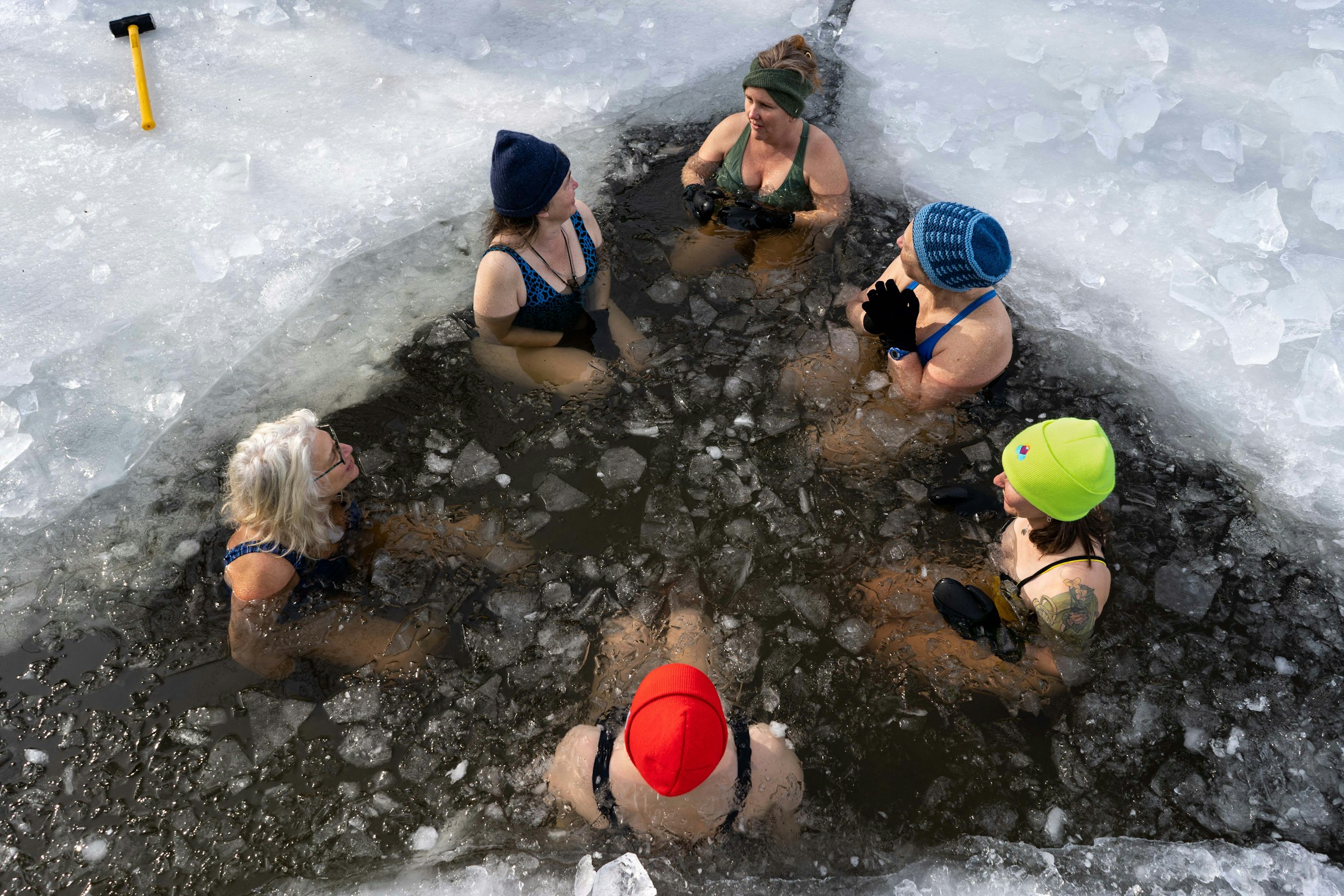
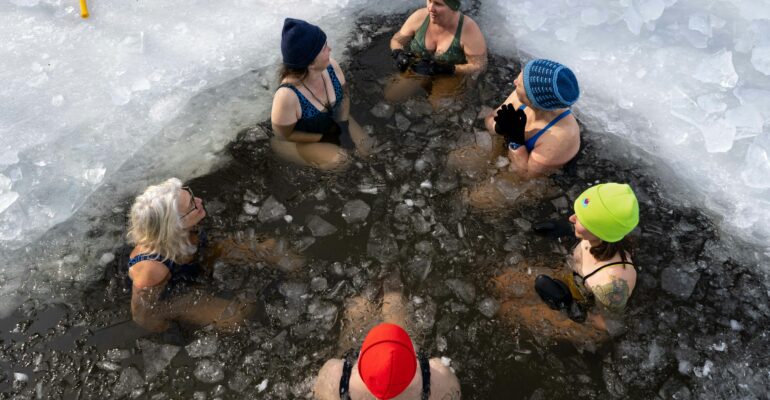
Should you use a cold plunge after strength training?
It depends on the job you need recovery to do. Cold-water immersion may reduce delayed-onset muscle soreness after demanding exercise. That can be useful when another performance is close. However, current evidence also suggests that repeatedly immersing trained muscles in cold water immediately after resistance sessions may modestly reduce gains in muscle size and, in some analyses, strength (Moore et al., 2023; Piñero et al., 2024; Grgic, 2023).
This does not mean that one cold plunge “kills your gains”, or that cold water is always harmful. It means recovery strategies should match the athlete’s priority. Feeling better tomorrow and adapting over the next three months are related aims, but they are not identical.
Why cold-water immersion can feel effective
Cold water removes heat rapidly and produces marked sensory and circulatory changes. After hard exercise, immersion may reduce soreness. A 2023 systematic review and meta-analysis found that cold-water immersion compared favourably with several other recovery approaches for some short-term outcomes, although results differed by outcome, comparator and time point (Moore et al., 2023).
That distinction matters. Perceived soreness is a legitimate outcome when an athlete must train, travel or compete again soon. It is not, however, a complete measure of tissue recovery or future adaptation. A person can feel fresher without every biological process having returned to baseline, and a temporary reduction in discomfort does not prove that the next training block will produce better results.
What is the possible adaptation trade-off?
Resistance exercise triggers a sequence of local signals involved in muscle remodelling. Cooling the exercised tissue may alter blood flow, temperature, inflammatory signalling and protein-synthesis responses. These mechanisms are not automatically “good” or “bad”; they help explain why timing and frequency may matter (Petersen & Fyfe, 2021).
A 2024 systematic review with meta-analysis found some evidence that cold-water immersion immediately after resistance training may modestly attenuate hypertrophy. The comparative estimate was small and uncertain, its credible interval included no difference, and study quality was generally fair to poor. A separate meta-analysis, whose pooled sample was 92% male, found a small attenuation of strength gains overall; attenuation was evident for cooling applied only to trained limbs, whereas whole-body immersion did not differ significantly from control (Piñero et al., 2024; Grgic, 2023).
Longer-term experimental work supports the plausibility of that finding. In a 12-week study of 21 physically active men, Roberts and colleagues found smaller gains in muscle mass and strength after cold-water immersion than after active recovery (Roberts et al., 2015). Later work and reviews have highlighted that protocols, training status, sex, muscle groups and measurement methods differ substantially between studies.
Better-supported short-term evidence: cold-water immersion may reduce soreness and support selected short-term recovery outcomes. Emerging evidence: habitual, immediate post-lifting use may blunt some hypertrophy adaptations; strength findings are mixed and protocol-dependent. Expert interpretation: the more routinely cooling is coupled to every growth-focused session, the stronger the reason to reconsider it.
When might cold immersion still be useful?
Context can shift the decision. Examples include a tournament with repeated matches, a dense competition schedule, a short turnaround between demanding sessions, or an unusual bout followed by expected post-exercise soreness. In such situations, short-term readiness may reasonably take priority over a possible difference in long-term adaptation. Do not use cold immersion to mask pain that is severe, worsening or disproportionate to the session. Unusual weakness or dark or tea-coloured urine after exercise requires urgent medical assessment (CDC/NIOSH, 2024).
The same logic is weaker after an ordinary hypertrophy session followed by ample recovery time. If the next important performance is several days away and muscle growth is the main objective, sleep, appropriate food intake, sensible programming and time are usually the first recovery tools to organise.
The EFWA COLD decision framework
Use COLD before treating a plunge as a default part of every programme.
COLD is a practical coaching mnemonic, not a validated screening or clinical decision tool.
- C — Competition proximity. Is there another important performance within hours or the next day? A short turnaround strengthens the case for prioritising symptom relief and readiness.
- O — Objective of the training block. Is the current priority competition performance, general wellbeing, strength or hypertrophy? Routine immediate cooling is harder to justify in a growth-focused block.
- L — Load and recovery evidence. Look at actual soreness, sleep, performance trends and session demands. Do not prescribe a recovery method simply because it is fashionable.
- D — Distance from the session. Consider how closely the cold exposure follows the resistance stimulus and how often it is repeated. Most long-term evidence concerns immersion used soon after lifting and repeatedly across a training programme; it does not establish that waiting a particular number of hours removes the adaptation risk.
Worked example: two athletes, two decisions
A tournament athlete
A court-sport athlete completes two matches on Saturday and must play again on Sunday morning. They report expected post-exercise leg soreness, have no injury or illness red flags after current screening, and have used supervised cold-water immersion comfortably before. COLD identifies a very short competition interval and a performance-first objective. Here, a controlled recovery protocol may be reasonable within the team’s established medical and performance procedures, trained supervision and practised emergency plan.
A hypertrophy-focused client
A recreational lifter performs three resistance sessions each week and has at least 48 hours before training the same muscle group again. They use an ice bath after every session because social media describes it as essential recovery. COLD identifies no immediate performance need and a clear muscle-growth objective. The more defensible choice is to avoid making immediate immersion a routine and to strengthen sleep, nutrition and load management instead.
Cold-water immersion is also a safety decision
Sudden cold exposure can provoke gasping, rapid breathing, vasoconstriction and sharp changes in heart rate and blood pressure. Open water adds drowning, current and environmental risks, while poorly managed shared facilities add hygiene concerns. Extreme protocols should not be normalised as a test of toughness (RNLI, n.d.).
Never use a cold plunge alone. Use a managed setting with trained supervision and an easy, immediate exit. Enter gradually, keep the head and neck out of the water, and do not deliberately hyperventilate or hold your breath in or near water (RLSS UK, n.d.; Royal Life Saving Society – Australia et al., 2024).
Stop and leave the water immediately if breathing cannot be controlled or if chest pain, palpitations, severe breathlessness, dizziness or faintness, confusion or loss of coordination occurs. Call 999 or 112 for collapse, loss of consciousness, severe or persistent chest pain or breathing difficulty, confusion or suspected hypothermia (NHS, 2023).
Children and frail or older adults require age-appropriate screening, a conservative managed environment and close professional supervision. Obtain individual medical advice before taking part if pregnant; if you have a chronic or serious illness, heart or circulatory problems including high blood pressure or Raynaud’s disease, cold urticaria or other increased cold sensitivity, an autoimmune disorder, respiratory or neurological concerns or a history of fainting; or if medication or treatment may affect heart rate, blood pressure, circulation, alertness or temperature control. This list is not exhaustive.
Fitness professionals should stay within their qualifications and facility procedures. They should not prescribe cold immersion as treatment for an injury or medical condition. A managed facility should have clear screening, supervision, hygiene and emergency procedures. No single water temperature or exposure time is universally appropriate.
Important: This article provides general education, not individual medical advice or a do-it-yourself cold-immersion protocol.
Evidence limitations
The long-term resistance-training literature remains relatively small. The hypertrophy review contained eight interventions, all involving adults aged 20–26; seven were male-only, and immersion was used after every session and within 15 minutes. Effects of occasional or delayed use remain unknown (Piñero et al., 2024). Immersion temperature, duration, depth and timing vary, as do training programmes and outcome measures. Acute recovery benefits do not establish better long-term performance, while group averages cannot predict an individual response. The hypertrophy signal is credible but imprecise; it supports selective use rather than an absolute prohibition.
The bottom line
Cold plunges are tools, not rituals. They may be useful when rapid recovery before another important performance matters. When strength or muscle growth is the main goal and recovery time is available, repeatedly plunging immediately after resistance exercise may be an unnecessary trade-off. Start with the objective, examine the evidence of need, and use the least complicated strategy that solves the real problem.
Explore more practical resources in the EFWA Knowledge Hub, meet the Academic Team, read how rest intervals affect strength and hypertrophy, or review EFWA’s Personal Trainer Course.
References
- Grgic, J. (2023). Effects of post-exercise cold-water immersion on resistance training-induced gains in muscular strength: A meta-analysis. European Journal of Sport Science, 23(3), 372–380. https://doi.org/10.1080/17461391.2022.2033851
- Moore, E., Fuller, J. T., Bellenger, C. R., Saunders, S., Halson, S. L., Broatch, J. R., & Buckley, J. D. (2023). Effects of cold-water immersion compared with other recovery modalities on athletic performance following acute strenuous exercise in physically active participants: A systematic review, meta-analysis, and meta-regression. Sports Medicine, 53(3), 687–705. https://doi.org/10.1007/s40279-022-01800-1
- Petersen, A. C., & Fyfe, J. J. (2021). Post-exercise cold water immersion effects on physiological adaptations to resistance training and the underlying mechanisms in skeletal muscle: A narrative review. Frontiers in Sports and Active Living, 3, 660291. https://doi.org/10.3389/fspor.2021.660291
- Piñero, A., Burke, R., Augustin, F., Mohan, A. E., DeJesus, K., Sapuppo, M., Weisenthal, M., Coleman, M., Androulakis-Korakakis, P., Grgic, J., Swinton, P. A., & Schoenfeld, B. J. (2024). Throwing cold water on muscle growth: A systematic review with meta-analysis of the effects of postexercise cold water immersion on resistance training-induced hypertrophy. European Journal of Sport Science, 24(2), 177–189. https://doi.org/10.1002/ejsc.12074
- Roberts, L. A., Raastad, T., Markworth, J. F., Figueiredo, V. C., Egner, I. M., Shield, A., Cameron-Smith, D., Coombes, J. S., & Peake, J. M. (2015). Post-exercise cold water immersion attenuates acute anabolic signalling and long-term adaptations in muscle to strength training. The Journal of Physiology, 593(18), 4285–4301. https://doi.org/10.1113/JP270570
- Centers for Disease Control and Prevention, National Institute for Occupational Safety and Health. (2024). Signs and symptoms of rhabdomyolysis. https://www.cdc.gov/niosh/rhabdo/signs-symptoms/index.html
- National Health Service. (2023). Hypothermia. https://www.nhs.uk/conditions/hypothermia/
- Royal Life Saving Society UK. (n.d.). Swimming pool activities involving extended breath-holding (GS012). https://www.rlss.org.uk/swimming-pool-activities-involving-extended-breath-holding-gs012
- Royal National Lifeboat Institution. (n.d.). Cold water shock. https://rnli.org/water-safety/know-the-risks/cold-water-shock
- Royal Life Saving Society – Australia, AUSactive, & Swimming Pool & Spa Association of Australia (SPASA). (2024). Position statement on cold water immersion therapy safety precautions in aquatic, fitness and leisure settings. https://www.royallifesaving.com.au/about/news-and-updates/news/2024/feb/position-statement-cold-water-immersion-therapy