Does Exercise Order Matter in Strength Training?

By Dr Mert Eray Onen, Founder & Academic Director, EFWA
Estimated reading time: 8 minutes · Sources checked: 3 November 2026 · Editorial review: 6 November 2026
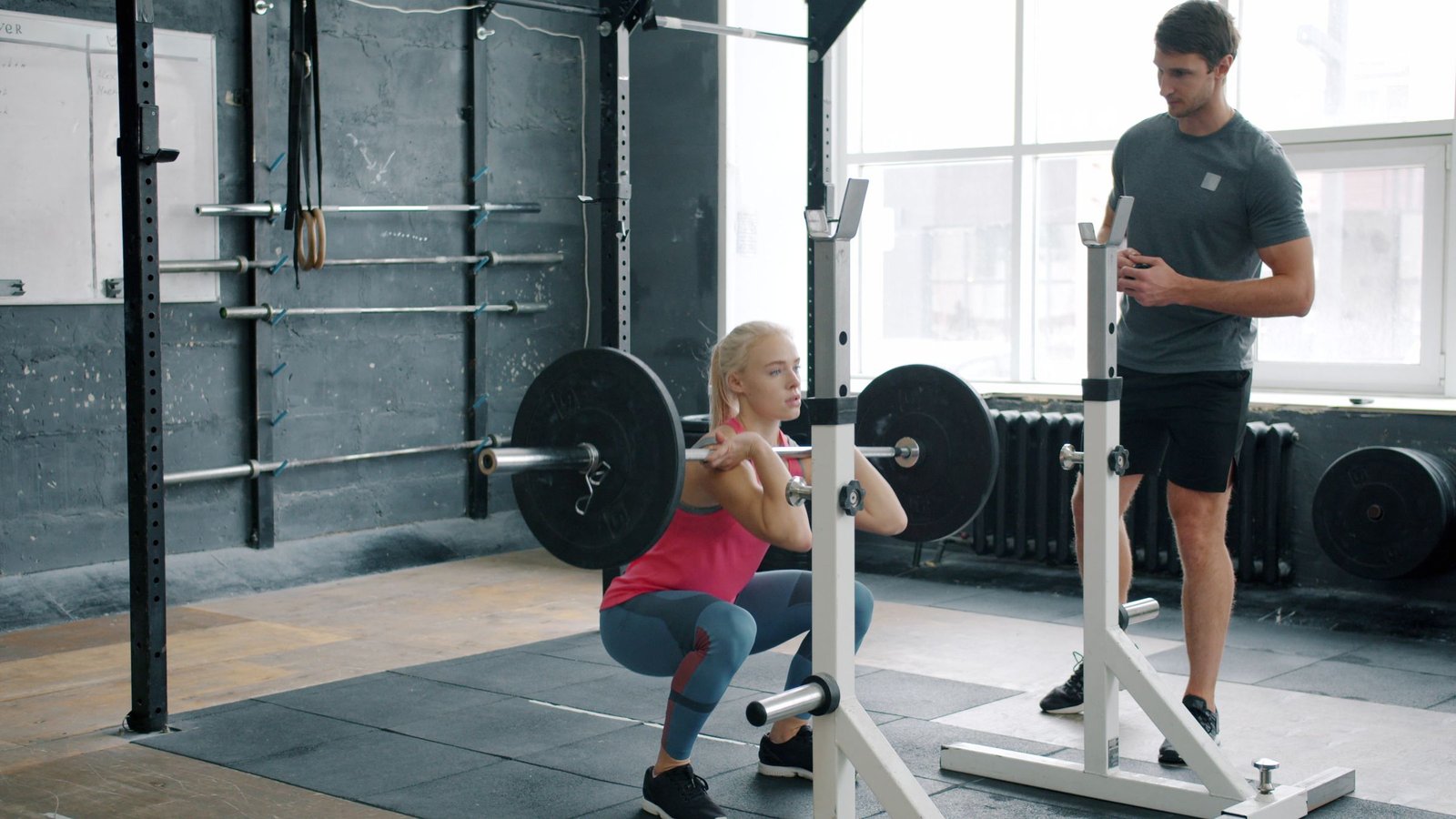
Exercise order can matter, but there is no single sequence that is best for every goal. If improving a particular lift is a priority, placing it early in the working session is a reasonable starting point. That is different from saying that every large-muscle exercise must always precede every small-muscle exercise. The useful question is: what are we trying to improve, and how will we judge it? (Spineti et al., 2010)
For a beginner or personal trainer, this turns an exercise list into a plan with a reason behind it. A programme can contain familiar movements and still leave its main goal until last. Equally, changing the order is not a substitute for choosing suitable exercises, loads and progression.
Start with the outcome, not a universal rule
“Getting stronger” needs a little definition. Do you mean lifting more in a particular exercise, completing the planned session, or improving a task outside the gym? Those outcomes are not interchangeable. A study measuring a bench-press one-repetition maximum—the heaviest load lifted once under the test conditions—does not automatically answer a question about everyday function.
EFWA’s practical suggestion is to write one priority beside the session before deciding its order. For example: “Practise and progress the selected press.” This is a planning aid, not a research-validated scoring system. It makes the reason for the sequence visible to both learner and instructor.
What did the training trials find?
Dias and colleagues randomly assigned untrained young men to a large-to-small exercise sequence, its reverse, or a non-training control. The programme lasted eight weeks, with three sessions each week. Both training groups increased their one-repetition maximum results from baseline, but statistically significant differences between the training orders appeared only in the small-muscle-group exercises. The finding supports paying attention to where an exercise sits; it does not establish that one sequence improves every lift more than another. (Dias et al., 2010)
A separate 12-week trial by Spineti and colleagues compared bench press, lat pull-down, triceps extension and biceps curl with the reverse sequence, plus a control group. Training took place twice weekly using nonlinear periodisation. Bench-press strength improved more with the bench press first; the other three strength measures favoured the reverse sequence. These are exercise-specific findings from that programme, rather than a universal ranking of exercises. (Spineti et al., 2010)
Strength and muscle growth need separate answers
Simão and colleagues studied 31 physically active men who had not resistance-trained for at least six months. They were randomly allocated to two opposite upper-body sequences or a control group. The 12-week programme used two sessions weekly. Maximum strength was assessed with one-repetition-maximum tests, and upper-arm muscle thickness with ultrasound. The study found no statistically significant differences in absolute strength or triceps thickness between the two training orders. (Simão et al., 2010)
That distinction matters when discussing results with a client. A strength result is not proof of greater muscle growth. Nor does a non-significant difference prove that two approaches are exactly equivalent. The trial’s small groups and selected measurement sites limit the conclusions we can draw. Its sets were encouraged to concentric failure; the study should not be read as an instruction that beginners need to copy that approach.
Does the same message apply to everyone?
Not necessarily. Cunha and colleagues investigated four exercise orders in 61 physically independent women over 60 after a 12-week resistance-training preparation phase. Their randomised crossover study included training periods separated by detraining. After the final training period, the researchers found no statistically significant differences between exercise orders across the assessed outcomes, which included strength and functional tests. (Cunha et al., 2023)
This is a useful counterweight to an absolute “first is always best” claim. Different participants, training histories, programmes and outcomes can produce different findings. It does not mean order is irrelevant for every older adult; it means the result should stay attached to the population and programme studied.
What does newer research add?
A 2026 trial compared heavy-resistance-first with ballistic-first contrast training. Twenty-one recreationally active female athletes were randomised; eighteen completed four weeks of training. Performance improved over time, without statistically significant group-by-time interactions. There was no non-training control group, so improvement over time alone cannot establish how much change the training caused. The small sample and short programme cannot establish that both orders are equivalent, nor does this design settle the order of an ordinary upper-body strength session. (Kharel et al., 2026)
The proposed mechanism behind putting the heavy exercise first is post-activation performance enhancement: the preceding activity might temporarily improve the following explosive task. Yet a plausible mechanism is not evidence that one programme produces superior long-term adaptations. This trial did not establish that mechanism as the cause of its changes. Mechanisms, immediate responses and training outcomes are distinct.
A practical example: explain the first working exercise
Imagine a beginner whose agreed priority is improving a particular pressing exercise. After suitable preparation and warm-up, the trainer puts that exercise early in the working session and records its load, completed repetitions and relevant technique observations. The remaining exercises still have a purpose; they are not simply filler.
Now imagine another learner whose priority is a different movement. Copying the first learner’s order without reconsidering the goal would miss the point. The useful principle is a reasoned priority, not loyalty to a template. These are illustrative coaching examples, not tested programmes or promises of a particular improvement.
If equipment is unavailable, agree a sensible alternative rather than treating the printed sequence as untouchable. Record the change. An occasional practical adjustment is different from deliberately testing a new order over several weeks.
Review the sequence without confusing the comparison
- Name the priority: identify the exercise or task you want to monitor.
- Record the context: note exercise position, load, repetitions and rest arrangements.
- Avoid changing everything together: if order, load and exercise selection all change, it becomes harder to interpret the result.
- Use more than one session: a single good or disappointing day is not a reliable verdict on a programme.
- Keep the rest of the plan accountable: review whether later exercises are still being completed as intended.
This checklist is an educational record-keeping suggestion. It cannot isolate cause and effect as a controlled trial can. Do not turn a training log into a claim that a particular sequence has been scientifically proven for one individual.
Make exercise order explainable
- Name the priority. What exercise or task are you monitoring?
- Explain the sequence. Why put this exercise first? Suitable preparation still comes before the working exercises.
- Review the record. One session is not a verdict. Record load, repetitions, rest and any changes.
Educational aid, not a tested programme. A training log alone cannot prove cause and effect.
What this evidence cannot promise
The studies discussed here do not establish one ideal order for every sport, clinical condition or Pilates class. They also do not demonstrate that moving an exercise earlier prevents injury. A goal-driven order does not override appropriate preparation, supervision or individual restrictions. If pain or another concerning symptom changes the session, respond within your professional scope rather than insisting on the planned sequence.
Order is only one programming decision. For related discussions, see how long to rest between sets and progressive overload in resistance training.
The takeaway: make the order explainable. Prioritise deliberately, distinguish strength from muscle-size outcomes, and review what actually happens. For more evidence-informed teaching discussions, explore the EFWA Knowledge Hub.
References
- Dias, I., de Salles, B. F., Novaes, J., Costa, P. B., & Simão, R. (2010). Influence of exercise order on maximum strength in untrained young men. Journal of Science and Medicine in Sport, 13(1), 65–69. doi:10.1016/j.jsams.2008.09.003
- Spineti, J., et al. (2010). Influence of exercise order on maximum strength and muscle volume in nonlinear periodized resistance training. Journal of Strength and Conditioning Research, 24(11), 2962–2969. doi:10.1519/JSC.0b013e3181e2e19b
- Simão, R., et al. (2010). Influence of exercise order on maximum strength and muscle thickness in untrained men. Journal of Sports Science and Medicine, 9(1), 1–7. Full research article.
- Cunha, P. M., et al. (2023). Effect of resistance exercise orders on health parameters in trained older women: A randomized crossover trial. Medicine & Science in Sports & Exercise, 55(1), 119–132. doi:10.1249/MSS.0000000000003030
- Kharel, A., Chaware, U., Hina, M., Baruah, J., & Thapa, R. K. (2026). Effects of exercise order during complex contrast training on the physical performance of recreationally active female athletes: A randomized parallel group trial. Isokinetics and Exercise Science. doi:10.1177/09593020261490731.
About the author
Dr Mert Eray Onen — Founder & Academic Director, EFWA. His educational work connects exercise physiology, applied anatomy and training science with professional practice. Academic profile · ORCID.
Disclosure: EFWA provides professional education in this subject area. This article provides general education, not an individual exercise prescription or medical advice.
Explore the EFWA Knowledge Hub or compare Personal Trainer courses.
Explore our Pilates instructor courses
For a separate overview of EFWA’s professional education options, explore the Master Pilates Instructor Programme or the Reformer Pilates Instructor Course. These course links are not endorsements or findings of the studies discussed above.